VAT on a Boat in France: Proof of VAT-Paid Status, Imports and Non-EU Owners
VAT on a boat in France: proof of VAT-paid status, import VAT, the risk of paying twice and temporary admission for non-EU owners.
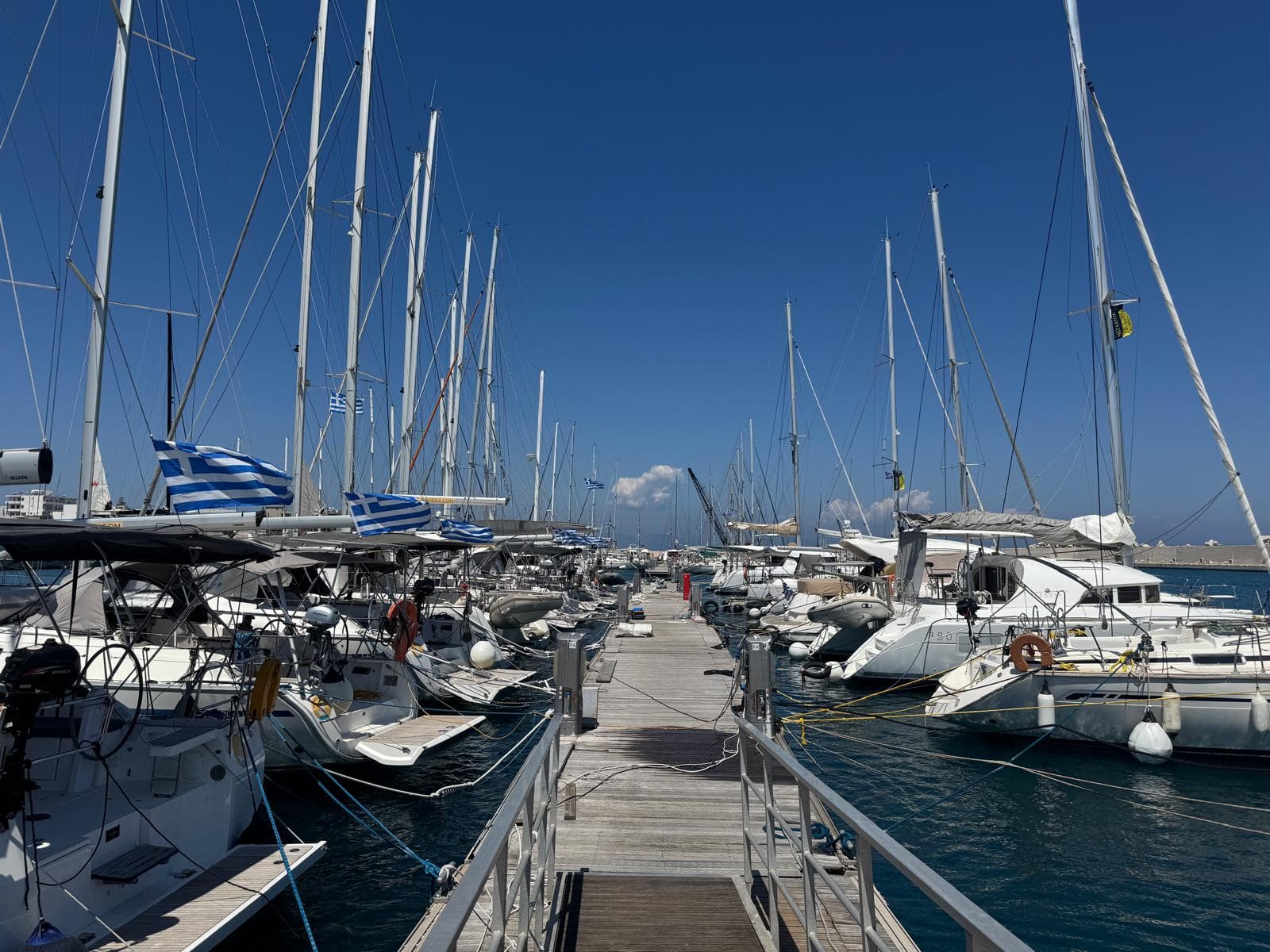
Boat VAT in France: Proof of VAT-Paid Status, Imports and Non-EU Owners
Of all the questions that surround a pleasure yacht connected to France, none follows the vessel as relentlessly as its VAT position. Boat VAT in France is not a one-off formality that is dealt with at the first sale and then forgotten: it is a status that attaches to the hull for its entire economic life, and that a French customs officer can ask you to evidence at any moment — at sea, in port, or during a routine control on a summer cruise. A boat whose VAT-paid status cannot be proved is a boat that is worth measurably less, that is harder to sell, that may be detained, and on which a tax of 20% of its value can be claimed years after the money first changed hands. For owners, buyers and sellers alike, the VAT file is therefore not paperwork — it is part of the asset itself.
The confusion that surrounds this subject comes from a single, recurring misunderstanding: people assume that "VAT on a boat" is a transaction tax that is either charged or not charged on a given sale, when in reality two very different ideas coexist. The first is whether VAT is due on a particular operation — a builder's first sale, an import from outside the European Union, an intra-EU acquisition. The second is whether the vessel has a lasting VAT-paid character that allows it to circulate freely in EU waters without further import VAT. A second-hand sale between two private individuals is, as a rule, outside the scope of VAT, yet the boat must still carry proof that VAT was paid at some earlier point. Owners who grasp this distinction protect themselves; those who do not pay twice, or discover at the worst possible moment that they cannot prove anything at all.
This guide, written by a French avocat d'affaires (business lawyer) who advises French and international clients on the tax and customs status of pleasure yachts, is deliberately focused on VAT and customs alone. It does not repeat the mechanics of how to buy a boat in France, nor the anatomy of the boat sale contract (acte de vente) — both have their own dedicated guides, to which we link where relevant. Here we examine what VAT-paid status really means, the documents that prove it, when import VAT becomes due under French law, the acute risk of paying VAT twice, the temporary admission regime for non-EU residents, how to write VAT protection into a sale contract, the VAT dimension of changing a flag or exporting a boat, the special case of charter and commercial use, and a practical checklist. Throughout, exact customs treatment depends on the facts, and specialist advice should always be sought before acting.
What "VAT-Paid Status" Really Means for a Boat in France
VAT on a transaction versus the lasting VAT-paid character of the vessel
The first thing to understand about boat VAT in France is that the words describe two separate legal realities that ordinary language merges. When a French shipyard sells a new boat, it charges French VAT on the price under the ordinary rules of the Code général des impôts (CGI): this is VAT on a transaction, collected by the seller and remitted to the Treasury. Once that VAT has been definitively paid in the European Union, the vessel acquires a different and durable attribute — a VAT-paid status (the market often speaks of a boat being "VAT-paid") — meaning it is in free circulation within the EU customs and fiscal territory and can move between member states without import VAT being charged again.
These two ideas can diverge sharply. A particular sale may carry no VAT at all and yet involve a boat that is perfectly VAT-paid; conversely, a boat may be the subject of a sale that is, in itself, outside the scope of VAT while having no evidence of any prior VAT payment, which leaves it exposed. The status is a characteristic of the thing, not of the latest contract. This is why a buyer must look past the question "is VAT charged on this sale?" to the far more important question "can this vessel prove it is VAT-paid in the EU?" — a distinction that we will see drives the entire documentary strategy below.
Why a private second-hand sale is generally outside the scope of VAT
When two private individuals sell a used boat between themselves, the transaction is, as a rule, outside the scope of VAT. VAT is a tax on supplies made by taxable persons acting as such in the course of an economic activity; a private owner who sells the boat he used for his own leisure is not, in that act, a taxable person, so he charges no VAT and issues no VAT invoice. This is reassuring for the seller and a relief for the buyer's budget — but it is also the source of a dangerous complacency, because the absence of VAT on the sale tells you nothing about the underlying status of the hull.
The decisive point is that the new owner inherits the vessel's VAT history regardless of the fact that his own purchase bore no VAT. If the boat was VAT-paid before the sale, it remains VAT-paid afterwards, and the buyer needs the original evidence of that earlier payment to prove it at a future control or resale. If the boat's VAT-paid status was never established, or was lost through an export and re-import, the private sale does not cure that defect: the buyer simply takes over a boat carrying an unresolved VAT exposure. The lesson is blunt — a VAT-free private sale must never be confused with a VAT-clean boat.
Why the status "follows the boat for life"
Customs control of pleasure craft is exercised on the vessel, not on a register of past owners. When a French customs unit boards a yacht and asks for proof of its fiscal situation, it does not care how many times the boat has been sold or that the current owner bought it second-hand without VAT; it asks the person on board to evidence that the vessel is in free circulation within the EU. The burden, in practice, falls on whoever is using the boat at that moment. This is what practitioners mean when they say VAT-paid status follows the boat for life: it is a permanent attribute that each successive owner must be able to demonstrate.
The consequence for owners is that the VAT file is a document set to be preserved, transferred and protected with the same care as the registration papers. A boat that changes hands several times, crosses borders, is re-flagged or undergoes a major refit abroad can accumulate events that affect its status; without an organised paper trail, the proof becomes impossible to reconstruct precisely when it is needed. A prudent owner treats the VAT evidence as an inseparable part of the vessel — and a prudent buyer refuses to complete without it.
The Documents That Prove a Boat's VAT-Paid Status
The original builder's or dealer's invoice showing VAT
The single most valuable document in any boat's file is the original first-sale invoice from the builder or dealer, showing the VAT that was charged and the rate applied. For a boat first sold new within the EU, this invoice is the cleanest possible proof that VAT was paid at the point the vessel entered free circulation, and it is the document that customs and prospective buyers will want to see first. It should identify the vessel unambiguously — builder, model, year, and the hull identification number — so that it can be reconciled with the boat physically present and with the registration documents.
The practical difficulty is that this invoice is decades old for many second-hand boats, and originals are routinely lost as vessels pass from owner to owner. Where the first-sale invoice no longer exists, the file must be rebuilt from whatever credible evidence remains: subsequent sale documents that reference the VAT-paid status, correspondence with the builder, or customs and tax documents generated by later events in the boat's life. The reconstruction is never as strong as the original invoice, which is precisely why the original should be demanded at every sale and archived carefully by every owner.
Customs documents and the quitus fiscal
Beyond the first-sale invoice, two families of official documents commonly evidence a boat's status. The first is customs documentation generated when a boat is imported into the EU from a third country and import VAT is paid and cleared — the import declaration and proof of payment of import VAT are the lasting evidence that the vessel was regularly placed in free circulation. The second, specific to certain intra-EU situations, is the quitus fiscal (tax clearance certificate): where a boat is acquired in another EU member state and the VAT position is regularised in France, the French tax administration can issue this certificate confirming that nothing further is owed, and it then serves as the proof to be carried on board.
It is important not to overstate or misuse these documents. A quitus fiscal is required only in defined intra-EU acquisition scenarios and is not a generic "VAT certificate" that every boat must hold; many perfectly compliant boats prove their status through the original invoice alone. The right document depends on the vessel's history, and the safe course is to identify, with professional help, exactly which proof applies to the boat in front of you rather than assuming a one-size-fits-all certificate exists. The table below maps the principal documents to what each one proves and when it is needed.
Why photocopies and verbal assurances are worthless at a control
Owners are frequently reassured by a seller's confident statement that "the boat is VAT-paid, everyone knows it", or by a faint photocopy of an invoice of uncertain origin. At a customs control, neither is worth anything. A verbal assurance is not evidence, and a photocopy whose provenance cannot be established proves nothing about whether the tax was actually paid and never reclaimed. The officer needs documents that genuinely demonstrate the fiscal situation of the vessel, and the owner who cannot produce them bears the consequence.
This is why, in every transaction, the buyer should insist on originals or properly certified documents, reconciled against the hull and the registration papers, and should treat the absence of credible VAT evidence as a price-affecting defect rather than a detail to be sorted out later. A boat sold with a complete, coherent VAT file commands its full value; a boat sold on the strength of reassurances carries a discount that reflects the real risk of a future reassessment. The contractual technique for securing this proof is examined further below and in our guide to the boat sale contract.
Table 1 — Documents that prove a boat's VAT-paid status
Import VAT on a Boat into France and the EU
The territoriality rules and when import VAT is due
Import VAT is the mechanism by which a boat coming into the EU from a third country is brought to the same fiscal footing as one bought within the Union. Under the French Code général des impôts, the scope of VAT is defined by Article 256 of the CGI, which subjects supplies of goods and services made for consideration by a taxable person to the tax, while the territoriality and the treatment of importations are governed by Articles 291 and 293 A of the CGI. In broad terms, the importation of a boat into the French (and EU) customs and fiscal territory from outside the Union is a taxable event, and import VAT becomes due when the vessel is released into free circulation, the person liable being the one designated by those provisions.
The practical trigger is movement across the EU's external frontier combined with the boat being put into free circulation in France. A yacht bought outside the EU and brought to a French port to be used there will, as a rule, give rise to import VAT unless a specific regime applies; the same is true of a boat that had previously lost its EU status and is re-imported without qualifying for relief. Because the exact characterisation depends on the boat's origin, its prior status and the precise circumstances of entry, the territoriality analysis under Articles 291 and 293 A should be carried out on the facts with customs and tax specialists rather than assumed.
The standard French VAT rate of 20%
Where import VAT is due, the rate that matters for pleasure boats is the standard French VAT rate of 20%, applied to the customs value of the vessel. This is the figure that turns an oversight into a serious financial event: 20% of the value of a yacht is rarely a trivial sum, and it falls due in addition to whatever the owner has already spent acquiring the boat. The rate is the same whether the boat is sail or motor, new or used, large or modest; what changes from case to case is the base on which it is calculated and whether a regime defers or removes the charge.
Owners sometimes hope that a low purchase price abroad will translate into a low import VAT bill, but the base used by customs is the value of the vessel for customs purposes, which is assessed according to the rules and may not match an artificially low invoice. Attempting to under-declare value is both ineffective and dangerous, exposing the owner to reassessment and penalties. The honest and prudent approach is to establish the correct base, apply the 20% rate, and treat the resulting figure as a known cost of importing the boat — or to structure the operation so that import VAT does not arise at all, where that is genuinely available.
A worked example of a reassessment
The scale of the exposure is best seen through a neutral illustration. Suppose an owner brings a second-hand sailing yacht worth €90,000 into France from a third country and uses it in French waters without paying import VAT, mistakenly believing that a private purchase abroad carries no French tax consequences. If customs later determine that import VAT was due, the principal reassessment is the standard rate applied to the value: 20% of €90,000 = €18,000. To that figure the administration will typically add late-payment interest and penalties, so that the total liability comfortably exceeds the headline tax — a very unwelcome surprise for an owner who thought the boat was "his" free and clear.
The same arithmetic explains why VAT evidence is worth so much at the point of purchase. A buyer who completes without resolving the VAT position is not saving money; he is silently accepting the risk of a five-figure reassessment of this kind, on top of interest and penalties, with no recourse against a private seller who has long since disappeared. The figures are illustrative only — the real base, rate of interest and level of penalty depend on the facts — but the order of magnitude is realistic, and it is precisely the exposure that a properly documented file is designed to eliminate.
The Risk of Paying VAT Twice
Loss of VAT-paid status after export and re-import
The most painful VAT outcome is not paying once but paying twice on a boat where the tax had already been settled. This happens because VAT-paid status is not indestructible: when a boat is exported outside the EU, it leaves the Union's fiscal territory, and on a later re-importation it may be treated as a fresh import — with import VAT due all over again — unless the conditions for relief are satisfied. An owner who cruises a VAT-paid yacht to a distant third country, keeps it there, and then brings it back can find that the boat is no longer regarded as being in free circulation, even though VAT was unquestionably paid years earlier.
The danger is heightened by the fact that the loss of status is often invisible at the time it occurs. Nothing physically changes about the boat; the owner sails away with a VAT-paid vessel and sails back believing he still has one. It is only at a control, or at the next attempted sale, that the gap appears — and by then the conditions that could have preserved the status may no longer be capable of being met. The way to avoid this is to plan any voyage or operation outside the EU with the return in mind, documenting everything needed to demonstrate that the boat is the same vessel returning in an unchanged state.
Returned-goods relief and major refits outside the EU
The principal protection against a second VAT charge on re-entry is returned-goods relief, which, where its conditions are met, allows a boat that previously had EU status to be re-imported without import VAT. The conditions are exacting: broadly, the same goods must return, within the relevant period and without having undergone treatment beyond what was necessary to maintain them. This last point is where owners are most often caught out. A major refit outside the EU — substantial works, significant new equipment, a rebuild that goes beyond mere maintenance — can defeat the relief, so that the returning boat, or at least the added value, is treated as imported and subjected to VAT.
This makes the location of significant works a genuine tax-planning decision, not merely a question of yard availability or cost. An owner contemplating a substantial refit in a third country should weigh the VAT consequences of re-entry before committing, because the saving on the works can be dwarfed by an import VAT charge on return. Here again the treatment is fact-specific, and the prudent course is to obtain specialist customs advice before the boat leaves, and to assemble the documentary proof of its state and value that returned-goods relief will require.
Why the risk is acute on a change of flag or a cross-border move
The double-VAT risk becomes especially acute when a boat changes flag or moves between customs territories, scenarios that are common for international owners. A change of flag can coincide with movements and ownership changes that, if handled carelessly, disturb the boat's settled status; a relocation that takes the vessel out of and back into the EU can trigger the re-import analysis described above. Because flag changes and cross-border moves bundle several sensitive events together, they are exactly the situations in which an owner should pause and verify the VAT position before acting, rather than treating the tax question as an afterthought to be tidied up later.
These operations are also where coordination matters most: the customs and VAT analysis has to be aligned with the re-registration and deregistration steps, so that the documentary trail tells a single coherent story. We examine the registration mechanics of a flag change in our dedicated guide to changing a boat's flag and deregistration in France; the present article concentrates on ensuring that the VAT consequences of such a move are understood and managed before, not after, the boat is committed to it.
Non-EU Residents and the Temporary Admission Regime
Using a non-EU boat in EU waters without import VAT
For owners established outside the European Union, EU customs law offers a valuable route that avoids import VAT altogether: the temporary admission regime. Under the Union Customs Code, Regulation (EU) No 952/2013, Articles 250 et seq., a person established outside the EU customs territory may bring a non-EU-flagged means of transport — including a pleasure boat — into the Union and use it temporarily without paying import VAT, on the basis that the vessel is not being placed in free circulation but only admitted for a limited time. In the standard case, the boat may remain under the regime for up to eighteen months before it must leave the EU customs territory or be regularised.
For the genuine non-resident owner who wishes to cruise EU waters seasonally while keeping the boat under a non-EU flag, this regime is precious: it lawfully suspends a charge that would otherwise be substantial, without requiring the boat to acquire EU VAT-paid status. It is, however, a privilege conditioned on the owner's actual situation, not a planning trick available to anyone who registers a boat abroad. Whether temporary admission is genuinely available, and how the eighteen-month period and any permitted interruptions are computed, are technical questions that should be confirmed before relying on the regime.
The strict conditions and the residence of the users
The regime's benefit is matched by strict conditions, and the most important concerns who is established where. Temporary admission is designed for persons established outside the EU customs territory; the residence of the person who owns and, critically, who uses the boat is central to whether the regime applies. A boat under temporary admission used by, or effectively put at the disposal of, an EU-resident person is the classic way the regime is breached, because the underlying premise — that the user belongs outside the EU — is no longer satisfied. Owners who are tempted to let EU-resident family or friends use the boat must understand that doing so can collapse the regime entirely.
The conditions extend beyond residence to the proper use, declaration and timing of the admission, and they must be respected continuously, not merely at the moment of entry. Because the regime depends so heavily on the precise facts — the nature of the establishment outside the EU, the identity of the users, the movements of the boat — generic reassurance is dangerous. Any non-EU owner intending to rely on temporary admission should map their actual usage against the regime's requirements with a specialist before bringing the boat into EU waters.
The immediate import-VAT liability if the regime is breached
The sanction for getting temporary admission wrong is severe and immediate: a breach of the regime's conditions extinguishes the suspension and renders import VAT due, as though the boat had been imported into free circulation, with the same 20% exposure and the same interest and penalties that attend any unpaid import VAT. An owner who believed the boat was lawfully cruising under temporary admission can find, after a control, that the regime never validly applied or was lost, and that the full import VAT charge crystallises against him. The very absence of a paid-VAT file — natural under temporary admission, where no EU VAT was paid — makes the position unrecoverable once the regime falls away.
The practical conclusion is the same as elsewhere in this article, only sharper: the temporary admission regime is genuinely useful, but it is not self-administering, and the cost of an error is the entire import VAT bill. Non-EU owners should obtain specialist customs and tax advice before bringing the boat in, keep evidence of their non-EU establishment and of the boat's movements, and avoid any arrangement that places the vessel in the hands of EU-resident users. Where a non-resident is also considering acquiring the boat, this analysis must be settled before signing rather than improvised at a quayside control.
Table 2 — When is VAT due on a boat in France?
VAT and the Sale Contract: Building Proof Into the Deal
Making written VAT evidence a condition precedent
Because VAT-paid status is an attribute of the boat that the buyer inherits, the place to secure it is the sale contract, and the most effective tool is a condition precedent. The contract should provide that completion is conditional on the seller delivering, before closing, written evidence of the vessel's VAT-paid status — the original first-sale invoice showing VAT, the relevant customs documentation, or the quitus fiscal as the case requires — reconciled with the hull and the registration papers. If the evidence is not produced, the buyer is entitled to walk away with the deposit returned, rather than completing and discovering the gap afterwards. This converts a vague hope that "the paperwork is somewhere" into a hard contractual gate.
The discipline matters because, once the price is paid to a private seller, the buyer's practical leverage evaporates. A VAT condition precedent ensures that the question is resolved while the money is still in escrow and the seller still has every incentive to cooperate. We set out how conditions precedent are drafted and sequenced in the broader transaction in our guide to buying a boat in France; the VAT condition is one of the small number that should never be waived.
The seller's VAT warranty in the bill of sale
Alongside the condition precedent, the bill of sale should contain an express seller's warranty on VAT: a representation that VAT has been definitively paid in the EU (or that the boat's status is otherwise regular), that the documents delivered are genuine and relate to the vessel, and that no customs or tax claim concerning the boat is pending or threatened. A warranty of this kind does two things. It allocates the risk contractually, so that if the representation proves false the seller is liable to compensate the buyer; and it focuses the seller's mind at the point of sale, because a seller who hesitates to warrant the VAT position is signalling that the position is not as clean as claimed.
The warranty technique here is the same risk-allocation logic used in company acquisitions, where representations, warranties and indemnities transfer identified exposures to the party best placed to bear them, as we explain in our guide to the warranty and price-adjustment mechanisms (garantie de passif). A yacht is, in this respect, a small asset deal: the VAT warranty is its tax covenant. The detailed drafting of these clauses, and their interaction with the rest of the deed, belongs to our dedicated guide to the boat sale contract (acte de vente) rather than being repeated here.
Pricing and disclosing a VAT risk honestly
Not every boat has a perfect VAT file, and a missing document does not always make a deal impossible — but it must be priced and disclosed honestly rather than papered over. Where the evidence is incomplete, the rational responses are to reduce the price to reflect the real risk of a future reassessment, to restructure the transaction (for example as a properly documented export sale where the buyer is taking the boat out of the EU), or to make completion conditional on the seller regularising the position first. What a buyer should never do is accept reassurance in place of evidence and pay the full price as if the boat were clean.
This honesty cuts both ways and connects to the seller's general duty of disclosure: a seller who knows the VAT file is defective and stays silent risks far more than a price chip if the buyer later discovers a reassessment, as the broader rules on the pre-contractual duty of information make clear. The cleanest deals are those in which the VAT position is put on the table early, evidenced or transparently discounted, and recorded in the contract — which is also why a focused legal audit of the boat's documentary file before signing repays its modest cost many times over.
VAT When Changing the Flag or Exporting the Boat
Export sales and the documentation that supports them
Selling a boat for export outside the EU, or moving it abroad on a change of ownership, is a legitimate operation, but it has to be documented as such if the VAT treatment is to hold up. An export sale typically relies on evidence that the vessel has actually left the EU customs territory, and that evidence — export declarations, proof of physical departure, the contractual terms identifying the operation as an export — is what allows the parties to treat the sale on the correct footing. A sale described loosely as "to a foreign buyer" without the supporting export trail is not the same thing as a properly evidenced export, and the difference can be expensive.
For the seller, the documentation also protects the boat's own narrative: a clean export trail explains why the vessel left the EU and supports any later analysis of its status, including a possible future re-import under returned-goods relief. For the buyer taking the boat out of the EU, the same documents are the foundation of the vessel's fiscal story in its new home. Because the precise requirements depend on the destination and the facts, the export documentation should be planned with customs specialists in advance, not assembled retrospectively.
Deregistration and coordinating VAT with re-flagging
A change of flag is not a single act but a sequence: the boat is deregistered from one register and entered on another, and around those steps sit the VAT and customs consequences of any movement out of and into the EU. The danger is treating these as separate workstreams that never speak to each other — the registration formalities handled by one adviser, the tax position by another, with no one ensuring that the documents are mutually consistent. A boat that is deregistered and re-flagged abroad while its VAT status is left unexamined can emerge from the process with an exposure that nobody priced.
The correct approach is to treat VAT and re-flagging as a single coordinated operation, sequencing the deregistration, the movement of the boat and the VAT analysis so that the paper trail is coherent end to end. The registration and deregistration mechanics themselves are set out in our guide to changing a boat's flag and deregistration in France; the VAT message of the present article is simply that the tax consequences must be settled in step with those formalities, ideally before the boat moves, so that re-flagging does not silently disturb a status the owner believed was secure.
Professional Sellers, Charter and Commercial Use
How charter and commercial history affects VAT
A boat that has been chartered or otherwise used commercially sits in a different VAT world from a purely private pleasure craft, and that history can affect its status and the treatment of its sale. Commercial use can mean the boat was operated by a taxable person, that VAT was handled under specific commercial rules, and that the fiscal trail looks different from the simple "VAT paid on the first sale and never touched again" story of a private boat. When such a vessel comes onto the second-hand market, its VAT position cannot be assumed from the fact that it is now offered as a leisure boat; it has to be examined in the light of how it was actually used.
For a buyer, the existence of a charter or commercial past is therefore something to probe rather than ignore, because it changes both the VAT analysis and the questions to ask of the documents. A boat marketed as a former charter or ex-commercial vessel should come with an explanation of how its VAT position was managed during that period, supported by documents, not merely a statement that it is now a private boat. Where the seller is itself a professional, the buyer should also remember that professional sellers are held to a higher standard on what they disclose about what they sell.
Why commercial use must be disclosed
Because commercial history bears directly on VAT, registration category and value, it is exactly the kind of decisive information that a seller must disclose rather than conceal. A contract should include a representation about whether the vessel has ever been used commercially — chartered, hired out, used for paid skippering — and, if it has, the documents that explain the consequent VAT treatment should accompany the deal. A seller who passes off a hard-worked ex-charter boat as a lightly used private yacht is not only misrepresenting condition; he may be hiding a VAT position that the buyer would have wanted to investigate.
This is a deliberately brief treatment of a technical area, because the detailed VAT rules for commercial and charter operations go well beyond the scope of a buyer-and-owner guide and depend heavily on how each vessel was structured and operated. The practical point for the present purpose is narrow and important: commercial or charter history is a VAT-relevant fact that must be surfaced, and any boat with such a past warrants specialist examination of its VAT position before purchase, sale, import or re-flagging.
Practical Checklist for Buyers, Sellers and Owners
For buyers and owners
The recurring theme of this guide is that VAT status is an asset that has to be proved, and the buyer or owner's job is to make sure the proof exists, is genuine, and stays with the boat. The exposure for getting it wrong — a 20% import VAT charge on the value of the vessel, plus interest and penalties — is large enough that the modest effort of verification always pays. The following points distil the buyer-and-owner side of the analysis into actions.
For sellers
Sellers often underestimate how much a clean VAT file is worth to them: it removes the buyer's strongest argument for a late price reduction, shortens the negotiation, and protects the seller against later claims of non-disclosure. Assembling the documents before marketing the boat is therefore in the seller's own interest, not merely a courtesy to the buyer.
Red flags and protective actions
Finally, certain warning signs recur across boat transactions and should each trigger a specific protective response before money moves. The table below consolidates the main VAT red flags, the risk each one carries, and the action that neutralises it.
Table 3 — VAT red flags and protective actions
Frequently Asked Questions (FAQ)
How do I prove a boat is VAT-paid in France?
You prove it with documents that demonstrate VAT was paid when the boat entered EU free circulation and was never reclaimed. The strongest single proof is the original builder's or dealer's first-sale invoice showing the VAT; for a boat imported from outside the EU, the import declaration and proof of import VAT paid play the same role; and in certain intra-EU acquisition scenarios a quitus fiscal (tax clearance certificate) issued by the French tax administration is the relevant proof. The documents should be reconciled with the hull identification number and the registration papers so that they clearly relate to the boat in front of you. Photocopies of doubtful provenance and a seller's verbal assurance are worth nothing at a customs control, which is why originals or properly certified copies are essential.
Do I pay VAT when buying a second-hand boat in France?
A second-hand sale between two private individuals within the EU is, as a rule, outside the scope of VAT, so no VAT is charged on that particular transaction. That does not mean the boat is VAT-clean: the vessel must still have an underlying VAT-paid status, and you inherit that status — good or bad — when you buy. The practical risk is buying a boat that was never properly VAT-paid, or that lost its status through an export and re-import, in which case you can face an import VAT reassessment of 20% of the value despite having paid no VAT on your own purchase. The protection is to obtain written VAT evidence before completing, as explained in our guide to buying a boat in France.
How much is import VAT on a boat in France?
Where import VAT is due on a boat brought into France (and the EU) from a third country, it is charged at the standard French VAT rate of 20%, applied to the customs value of the vessel under the territoriality and import rules of Articles 256, 291 and 293 A of the Code général des impôts. On a second-hand yacht valued at €90,000, for example, the principal charge would be 20% of €90,000, that is €18,000, before any late-payment interest and penalties that the administration may add. The base used is the value of the boat for customs purposes, which may not match a low purchase invoice, and under-declaring value is both ineffective and risky. Because the exact figure depends on the facts, the import position should be checked with customs specialists before the boat is used in France.
Can you lose VAT-paid status on a boat, and can you end up paying VAT twice?
Yes. VAT-paid status is not permanent: when a boat is exported outside the EU and later re-imported, it may be treated as a fresh import with import VAT due again, unless the conditions for returned-goods relief are satisfied — broadly, that the same goods return within the relevant period without having undergone more than maintenance. A major refit outside the EU can defeat that relief, and a change of flag or a cross-border move can disturb the status as well. This is how owners end up paying VAT twice on a boat where it was already paid once. The way to avoid it is to plan any operation outside the EU with the return in mind and to take specialist advice before the boat leaves, keeping the documents that prove the vessel returns unchanged.
How can a non-EU resident use a boat in France without paying VAT?
A person established outside the EU customs territory may, under the temporary admission regime of the Union Customs Code, Regulation (EU) No 952/2013, Articles 250 et seq., bring a non-EU-flagged pleasure boat into EU waters and use it temporarily — up to eighteen months in the standard case — without paying import VAT, because the boat is not placed in free circulation. The regime is subject to strict conditions, the most important concerning the residence of the users: it is designed for non-EU-established persons, and letting an EU resident use the boat is the classic way to breach it. A breach makes import VAT immediately due at 20%, with interest and penalties. Any non-EU owner relying on this regime should obtain specialist customs and tax advice before bringing the boat in.
What VAT clauses should be in a boat sale contract in France?
Two clauses do most of the work. First, a condition precedent making completion conditional on the seller delivering written VAT evidence — the original first-sale invoice, the customs documents, or the quitus fiscal — before closing, so the question is resolved while the price is still in escrow. Second, a seller's warranty in the bill of sale that VAT has been definitively paid in the EU (or that the status is otherwise regular), that the documents are genuine and relate to the vessel, and that no customs or tax claim is pending. Where the file is incomplete, the price should be reduced or the deal restructured rather than completed on trust. The detailed drafting of these clauses belongs to our guide to the boat sale contract (acte de vente), and the risk-allocation logic mirrors that of a settlement agreement (protocole transactionnel) in disputed cases.
Does changing a boat's flag affect its VAT status?
It can. A change of flag is a sequence of events — deregistration from one register, entry on another, and any movement of the boat out of and into the EU — and if those movements take the vessel outside the EU and back, the re-import analysis described above is engaged. The mistake to avoid is handling the registration formalities and the tax position as separate matters that never meet, leaving the boat re-flagged but with an unexamined VAT exposure. VAT and re-flagging should be treated as a single coordinated operation, with the deregistration, the movement of the boat and the VAT analysis sequenced so the documents are coherent. The registration mechanics are covered in our guide to changing a boat's flag and deregistration in France; settle the VAT consequences before the boat moves.
Conclusion
Boat VAT in France rewards owners who understand one idea and punishes those who do not: VAT-paid status is a permanent attribute of the vessel, distinct from whether VAT is charged on any given sale, and it must be capable of being proved at any moment for the life of the boat. From that idea everything else follows. A private second-hand sale carries no VAT but does not cleanse a defective status; the proof of VAT-paid status rests on originals — the first-sale invoice, customs documents, or the quitus fiscal — not on photocopies or reassurance; import VAT on a boat brought from outside the EU is due at 20% of its value under Articles 256, 291 and 293 A of the Code général des impôts, with interest and penalties on top; and an export and re-import, or a refit abroad, can quietly destroy a status that was settled years earlier, exposing the owner to paying VAT twice.
For non-EU residents, the temporary admission regime of the Union Customs Code is a genuine and valuable route to using a boat in EU waters without import VAT, but it is hedged with strict conditions — above all on the residence of the users — and a breach makes the full charge fall due immediately. In every scenario, the practical defences are the same: resolve the VAT position before money moves, make written evidence a condition precedent and a seller's warranty, disclose and price any defect honestly, and coordinate VAT with any change of flag or export rather than improvising after the fact. Exact customs treatment is fact-specific, and these decisions warrant specialist advice taken before, not after, the boat is committed.
Victoris advises French and international clients on the VAT and customs status of pleasure yachts, structures sale contracts and re-flagging operations, and coordinates with customs and tax specialists to ensure that a boat's fiscal position is settled, evidenced and protected. If you are buying, selling, importing or re-flagging a yacht connected to France, or if a control or a planned voyage has raised a question about your boat's VAT status, contact the firm through victorisavocat.com for a confidential review of your situation.
Article written by Guillaume Leclerc, business lawyer in Paris (avocat d'affaires), 34 Avenue des Champs-Élysées.