The Boat Sale Contract in France (Acte de Vente): Clauses, 'As-Is' Sales and Seller's Liability
Boat sale contract in France (acte de vente): mandatory written form, key clauses, as-is sales, seller's liability and post-sale formalities.
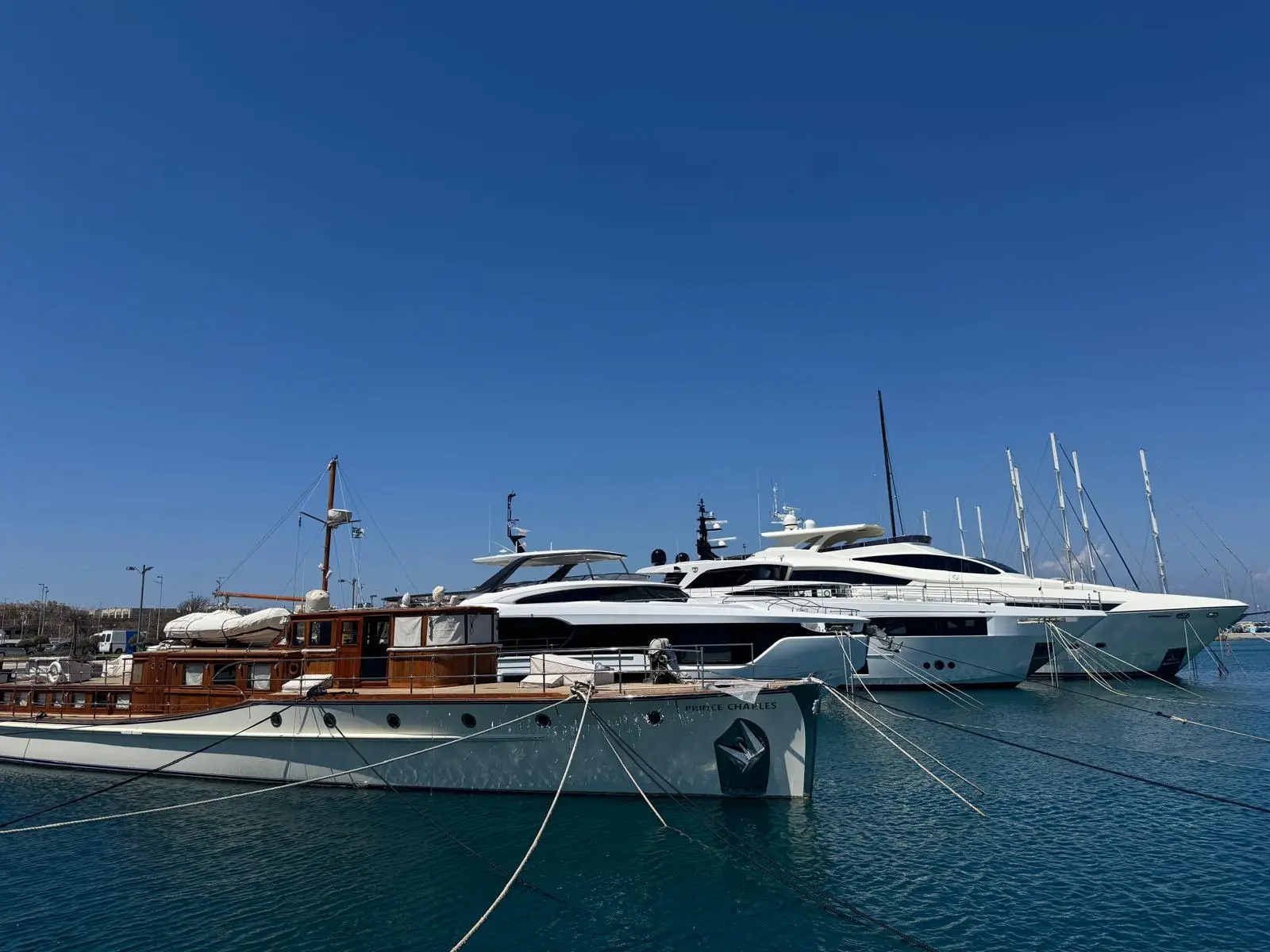
Every year, thousands of second-hand pleasure yachts change hands under French flag, from a €15,000 trailer-sailer in Brittany to a €900,000 catamaran in the Golfe de Saint-Tropez. Yet a surprising number of these transactions are documented on a single-page form downloaded from a forum, or on a broker's recycled template that nobody has read since 2011. This is a serious mistake. The boat sale contract in France — the acte de vente (deed of sale) — is not a mere administrative slip needed to update a registry. It is the legal instrument that transfers ownership of a registered vessel, allocates the risk of loss, organises the payment of a six-figure price between strangers, fixes the seller's liability for defects, and decides, two years later, who wins the lawsuit when the keel matrix turns out to be cracked.
French law gives this contract a dual nature, and that duality explains most of the traps. On one side, the sale of a boat is an ordinary civil sale: it is formed by consent under Article 1583 of the Civil Code, it carries the statutory hidden defects warranty of Articles 1641 to 1648, and it is exposed to annulment for dol (fraudulent concealment) under Article 1137. On the other side, a registered vessel is a special asset governed by the Code des transports (French Transport Code): the transfer of ownership must be made in writing on pain of nullity under Article L. 5114-1, the vessel may carry a registered hypothèque maritime (maritime mortgage), and the sale triggers mandatory declarations and an annual tax, the TAEMUP. Add a foreign buyer, a wire transfer that takes three weeks to clear and an "as-is" clause of uncertain effect, and you understand why pleasure-boat litigation is a steady source of work for French courts.
This guide, written by a French avocat d'affaires (business lawyer) who drafts and negotiates these contracts in both French and English, walks you through the entire lifecycle of a boat sale under French law: why the written deed is mandatory, what a well-drafted acte de vente must contain, how to secure the price through third-party escrow, what an "as-is" sale really protects you against, how the seller's duty of disclosure works, how ownership and risk are transferred, which representations the buyer should demand, which formalities and taxes follow the signature, and how cross-border deals should be papered. Throughout, we will follow a concrete example: the sale of a Grand Soleil 43, agreed at €108,000 with a 10% deposit and a 60-day longstop date.
Why Selling a Boat in France Requires a Written Contract
Article L. 5114-1 of the Code des transports: writing on pain of nullity
For a registered vessel, the written form is not optional and it is not merely a matter of proof. Article L. 5114-1 of the Code des transports provides that any deed constituting, transferring or extinguishing ownership of, or any other real right over, a registered vessel must be made in writing, on pain of nullity (à peine de nullité). The same provision requires the deed to contain the particulars necessary to identify the parties and the vessel. In legal terms, the writing is required ad validitatem, as a condition of validity, and not simply ad probationem, as evidence. A handshake deal on the pontoon, an exchange of text messages, even a bank transfer with "purchase of Altaïr" in the reference field: none of this validly transfers ownership of a registered pleasure yacht under French law.
The practical consequences are severe for both sides. A buyer who has paid without a compliant written deed holds no title that he can register; he cannot obtain a registration certificate in his name, cannot properly insure the vessel as owner, and may find himself in a restitution battle if the seller's creditors appear. A seller who has handed over the boat without a compliant deed remains the registered owner, with everything that entails: liability towards third parties, port dues, fines and tax notices. The very first function of the acte de vente is therefore constitutional in the literal sense: without it, in the eyes of French maritime law, there is no transfer at all.
Article 1583 of the Civil Code: consent forms the sale — which is exactly the problem
Under Article 1583 of the Civil Code, a sale is perfect between the parties, and ownership is acquired by the buyer as against the seller, as soon as they have agreed on the thing and on the price, even though the thing has not yet been delivered nor the price paid. This default rule, designed in 1804 for sacks of grain, is dangerous when applied to a yacht. Taken literally, it means that the moment the seller of Altaïr accepts the buyer's offer of €108,000, ownership — and with it, in principle, the risk of loss — could pass to a buyer who has paid nothing, while the boat still sits in the seller's marina berth through the autumn storms.
This is why every competent French boat sale agreement contractually displaces the default rule. The parties stipulate that, notwithstanding their agreement on thing and price, ownership will pass only upon full and irrevocable payment of the price, and risk will pass only upon delivery, recorded in a signed protocol. Article 1583 is not mandatory law on these points; it yields to the contrary intention of the parties. The deed of sale is therefore not just the formal vehicle required by Article L. 5114-1: it is the place where the parties re-sequence the civil law so that money, ownership, risk and possession move in the right order.
From offer to deed: the role of preliminary agreements
In practice, a yacht sale rarely goes from first visit to final deed in one step. The usual sequence is an offer to purchase subject to conditions (survey, sea trial, financing), the payment of a deposit, and then the signature of the acte de vente once the conditions are satisfied. Some transactions use a genuine pre-contract — a bilateral promise of sale or a unilateral option — and the legal regime of these instruments matters enormously, because it determines whether a party who walks away merely loses a deposit or can be forced to complete. We have dedicated a full guide to unilateral promises and preliminary contracts, and the principles described there apply to boats just as they do to shares or buildings.
In our Altaïr example, the buyer signed an offer at €108,000 against an asking price of €115,000, paid a deposit of €10,800 (10%) into escrow, and the parties signed a deed of sale with two conditions precedent — a satisfactory marine survey and a sea trial — to be fulfilled within 30 days, with a longstop date of 60 days after which either party could walk away if completion had not occurred. This architecture, standard in well-advised deals, only works if the trigger events, the fate of the deposit in each scenario and the longstop mechanics are spelled out in writing. Ambiguity here is the single most common source of deposit litigation.
Anatomy of a Well-Drafted French Boat Sale Agreement
Identifying the parties and designating the vessel
Because Article L. 5114-1 requires particulars identifying the parties and the vessel, this section is not boilerplate: it conditions the validity of the deed. For the parties, the contract should state full names, dates and places of birth, addresses, nationality and, where relevant, matrimonial property regime — many cruising yachts are co-owned by spouses, and both co-owners must sign. Where the seller is a company (an SCI, an SARL holding the boat, a leasing company at the end of a location avec option d'achat), the deed must identify the entity, its registration number and the authority of the signatory.
The designation of the vessel should be copied, character by character, from the registration certificate (certificat d'enregistrement, formerly the acte de francisation): the vessel's name, builder, model and year of build, the WIN (Watercraft Identification Number, the hull number), the registration number and port, the engine make, model, power and serial number, the hull dimensions, and the EC design category (A, B, C or D), which defines the sea conditions the boat is certified for. A mismatch between the deed and the registry — a transposed digit in the WIN, an engine replaced years ago and never declared — can block the transfer at the registration stage and gives a bad-faith party a pretext to contest the deed.
Scope of the sale: gear, equipment and the inventory schedule
A yacht is never sold bare. Sails, electronics, the tender and outboard, ground tackle, safety equipment: on a 43-foot yacht this routinely represents €20,000 to €40,000 of value, and it is precisely where delivery-day disputes erupt. The contract should state that the vessel is sold with all gear and equipment on board as listed in an inventory schedule, and that anything not listed (the seller's personal effects, tools, the paddleboard his children own) is excluded. The inventory should be specific: not "sails", but "mainsail North Sails 2019, genoa 106% Incidence 2021, asymmetric spinnaker with sock". For professional sellers who transact regularly, the inventory practice should also be consistent with their general terms and conditions of sale.
- The inventory should identify each significant item by make, model and year, because "B&G chartplotter 2021" is enforceable while "navigation electronics" is not.
- Serviceable safety equipment should be listed with its certification or service date, such as "6-person liferaft, last serviced March 2025".
- The schedule should state which items are sold in working order and which are sold as untested, so that a dead windlass discovered at delivery is governed by the contract rather than by argument.
- Both parties should initial the inventory at signing and tick it off together at delivery, item by item, before the delivery protocol is signed.
Price, conditions precedent and the schedules
The price should be stated in figures and in words, with the currency, and the deed should describe the full payment path: deposit already paid into escrow, balance to be paid, the account into which it must be paid, and the rule for determining when payment is deemed received (we return to this below). The conditions precedent (conditions suspensives) typically cover a satisfactory survey, a sea trial, the buyer's financing, and the release of any registered mortgage; each condition needs a deadline, a standard ("satisfactory to the buyer acting reasonably" or an objective threshold such as "no structural defect whose remedy exceeds €5,000"), and a stated consequence — refund of the deposit, renegotiation, or termination.
Finally, a serious acte de vente is recognisable by its schedules. They are not decorative: each one neutralises a classic dispute. The standard set comprises the copy of the registration certificate, the inventory, the disclosed damage and casualty history schedule, the escrow terms, the form of delivery and acceptance protocol, and the written VAT evidence. In the Altaïr deal, the damage schedule disclosed a 2022 grounding with the surveyor's report and a costed repair invoice — a disclosure that, as we will see, protected the seller at least as much as the buyer.
Table 1 — Essential clauses of a French boat sale contract
The table below summarises the clauses that no boat sale contract in France should omit, the function each clause performs, and the legal provision it rests on. It can serve as a checklist when reviewing a draft received from a broker or a counterparty.
Price, Deposit and Secure Payment
Third-party escrow versus broker-held deposits
The single best protection in a private yacht sale is an independent third-party escrow (séquestre). Three options exist in France: a notaire (civil-law notary), a lawyer through the CARPA — the regulated, segregated funds-handling system of the French bars, through which an avocat may only move funds linked to a documented legal act and under strict compliance controls — or a specialised escrow institution. In all three cases, the deposit and the balance sit with a regulated professional who releases funds only when the contractually defined conditions are met, evidenced by documents such as the signed delivery protocol.
Compare this with the widespread practice of paying the deposit into the broker's ordinary business account. The broker is not a neutral stakeholder: he acts under a mandat (agency agreement) for the seller, earns his commission only if the sale closes, and his account offers no segregation if his firm fails. The legal framework of that relationship — the broker's authority, his duty to account, his liability — is examined in our practical guide to the agency agreement (contrat de mandat). In the Altaïr sale, the €10,800 deposit went to an escrow account, with written escrow terms annexed to the deed stating exactly which documents trigger release to the seller, refund to the buyer, or forfeiture as agreed compensation.
Clearing times and the deemed-receipt clause
Sellers consistently underestimate how slowly money becomes truly theirs. A foreign cheque or banker's draft can take 15 days to 3 weeks to clear definitively; even a SEPA or international wire can be recalled in cases of fraud before it is finally settled. The contract must therefore define payment not as the issuance of an instrument, nor as the appearance of a provisional credit line, but as the final and irrevocable credit of the full amount to the designated account — and stipulate that payment is deemed received only at that moment. Ownership transfer, delivery and the handover of the registration documents should all be expressly conditioned on that deemed receipt.
In figures: the Altaïr buyer owed a balance of €97,200 (€108,000 minus the €10,800 deposit). The deed provided that the seller would present the boat for delivery within five business days after the escrow agent confirmed final, irrevocable credit of the balance. The seller never handed over the keys, the registration certificate or the secure transfer code against a payment confirmation PDF — a document that any fraudster can fabricate in minutes. This sequencing costs nothing and defeats the most common scam in the second-hand boat market.
Payment fraud: verify who you are actually paying
Boat sales are a prime target for payment-diversion fraud: a hacked email account, a last-minute message announcing that "our account has changed", and the buyer wires €97,200 to a mule account in another country. French banks now operate name-checking, but the contract should build in its own defences. The golden rules are simple: the account holder's name must match the seller's name on the deed and the IBAN must be stated in the contract itself; any change of payment instructions must be verified through a second, independent channel (a phone call to a number exchanged at the outset, never to a number contained in the suspicious email); and the deed should stipulate that instructions to pay any account other than the one designated in the contract are void unless confirmed in writing by both parties and the escrow agent.
- State the escrow account's IBAN and account holder in the deed itself, so that any divergent instruction is visibly abnormal.
- Confirm payment instructions by telephone or video call with a person whose identity has been verified at the start of the transaction.
- Treat any message announcing new bank details, however plausible its tone, as fraudulent until proven otherwise.
- Use the escrow agent as the single point of payment, which removes the incentive to attack the parties' mailboxes at all.
Selling a Boat "As Is" (Vente en l'État) and the Hidden Defects Warranty
The statutory warranty of Articles 1641 to 1648 of the Civil Code
Under Article 1641 of the Civil Code, the seller owes the buyer a warranty against hidden defects (vices cachés) which make the thing unfit for its intended use, or which so diminish that use that the buyer would not have bought it, or would have paid less, had he known. For a yacht, the case law catalogue is well stocked: osmosis blistering through the gelcoat, delamination of the hull, a cracked keel grid after an undisclosed grounding, corroded keel bolts, a saildrive eaten by electrolysis, structural rot in a wooden mast step. The defect must be hidden (not apparent to a normally diligent buyer), anterior to the sale, and sufficiently serious.
If the warranty applies, Article 1644 gives the buyer a choice: return the boat and recover the full price (the action rédhibitoire), or keep it and recover part of the price as assessed by experts (the action estimatoire). Under Article 1648, the claim must be brought within two years from the discovery of the defect — not from the sale, which means a seller can be pursued long after he has spent the money. It is precisely to escape this regime that French boat sale contracts almost universally contain an "as-is" clause. The question is what that clause is actually worth.
What an "as-is" clause can and cannot do
The legal basis of the as-is sale is Article 1643 of the Civil Code: the seller is liable for hidden defects even if he did not know of them, unless he has stipulated that he will not be bound by any warranty. The exclusion clause (clause de non-garantie) is therefore lawful — but French courts have confined it within strict limits. First, it only protects a seller who was genuinely unaware of the defect: a seller in good faith. Second, Article 1645 provides that a seller who knew of the defect owes the buyer, beyond restitution of the price, all damages — and the case law holds that a seller who knew cannot hide behind his exclusion clause at all. Bad faith dissolves the clause.
Courts also construe these clauses strictly. A vague formula such as "sold in the condition in which it stands, well known to the buyer" will be read narrowly; a robust clause states expressly that the vessel is sold en l'état (as is), that the seller excludes the hidden defects warranty of Articles 1641 et seq. to the fullest extent permitted, that the buyer has had the opportunity to commission a survey and a sea trial, and that the price reflects the vessel's age and condition. Even then, the clause is a shield for the honest, not a licence for the silent: the moment the buyer proves the seller knew — a repair invoice in the seller's name, an insurance claim, a yard email — the shield evaporates and Article 1645 exposes the seller to the full loss, including consequential damages.
Private seller versus professional seller
The dividing line that dominates this entire field is the seller's status. A private seller in good faith can validly exclude the warranty under Article 1643. A professional seller — a dealer, a shipyard, a charter operator selling its fleet boats, a broker selling his own vessel — is treated by settled French case law as irrebuttably presumed to know the defects of what he sells. The consequence is mechanical: the professional is always deemed a seller "who knew" within the meaning of Article 1645, so his exclusion clause is ineffective against a non-professional buyer, and he owes full damages on top of restitution or price reduction.
The grey zones deserve attention. An owner who buys, refits and resells several boats over a short period may be requalified as a professional notwithstanding his amateur status on paper; a company holding a single yacht for the use of its director is generally not a professional seller of boats, but the question is one of fact. Buyers should also note that the presumption works for them only if they are themselves laymen: between two professionals of the same speciality, the exclusion clause can regain effect. For a private seller, the lesson is the mirror image: your as-is clause is precious, and the way to keep it effective is to disclose everything you know — which leads directly to the duty of disclosure.
Table 2 — Seller's liability: what survives an "as-is" clause
The table below maps the five situations that account for virtually all hidden-defect litigation in second-hand yacht sales, and shows in which of them the exclusion clause actually holds.
The Seller's Duty of Disclosure
Article 1112-1: a duty of public order that no clause can erase
Since the 2016 reform of French contract law, Article 1112-1 of the Civil Code imposes a general pre-contractual duty of information: a party who knows information whose importance is decisive for the other party's consent must disclose it, whenever the other party legitimately does not know it or relies on the first party. Crucially, the final paragraph of the provision declares this duty to be of public order (ordre public): the parties can neither limit nor exclude it. No as-is clause, no "buyer relies solely on his own survey" stipulation, no entire-agreement clause can relieve the seller of a yacht from disclosing what he knows and what matters — the grounding, the lightning strike, the chronic engine overheating, the keel repair.
This duty operates alongside, and independently of, the hidden defects warranty. Even where the defect claim would fail — because the defect is arguable, or the two-year period of Article 1648 has run — a breach of Article 1112-1 grounds liability in damages and, where the breach caused a vice of consent, annulment of the contract. We have devoted a detailed analysis to this cornerstone provision in our article on the pre-contractual duty of information; every seller of a second-hand boat should read it before answering the buyer's first email.
Fraudulent concealment (dol) under Article 1137
One degree further lies dol (fraud). Under Article 1137 of the Civil Code, fraud includes not only lies and manoeuvres but also the intentional concealment by one party of information whose decisive character for the other party he knows. The seller who repaints the bilges to mask a repaired keel grid, who answers "no accidents, no damage" while holding a €14,000 insurance settlement for a collision, or who quietly deletes the grounding from the maintenance log he hands over, commits dol. The sanction is the annulment of the sale — the buyer returns the boat, the seller returns the price, often years later and after depreciation — plus damages covering survey costs, berthing, insurance, financing costs and sometimes lost enjoyment.
Buyers should understand how discoverable these histories are. Marine surveyors recognise repaired laminate under moisture meters and percussion sounding; insurers keep claim records; yards keep invoices; previous owners talk. In litigation, a judicially appointed expert (expert judiciaire) will reconstruct the vessel's history with disconcerting ease. For the seller, the strategic conclusion is not to gamble on silence but to organise disclosure — which, properly done, transforms a liability into a defence.
The disclosed damage schedule: the clause that protects both sides
Best practice, systematically used in well-advised deals, is a "Disclosed Damage and Casualty History" schedule annexed to the deed. For each event, the schedule itemises: the date and circumstances (grounding on rock, lightning strike, dock collision), the damage observed, the surveyor's report or yard diagnosis (attached as an exhibit), photographs before and after repair, the costed repair invoice or quotation, and the identity of the repairing yard. The deed then states that the buyer has reviewed the schedule, accepts the vessel with this known history, and that the agreed price takes it into account.
This mechanism protects both parties, which is why it is so effective in negotiation. The buyer is genuinely informed and can price the risk — in the Altaïr sale, the disclosed 2022 grounding and its €9,500 keel-grid repair were the very reason the price moved from €115,000 to €108,000. The seller, in turn, holds written proof that he performed his Article 1112-1 duty, that the defect was not "hidden" within the meaning of Article 1641 (a disclosed defect cannot be a hidden one), and that the damage was priced into the deal — three complete defences against the buyer who, two seasons later, rediscovers the repair and threatens proceedings. A one-page schedule routinely saves a €40,000 lawsuit.
Transfer of Ownership and Transfer of Risk
Deferring ownership: the retention of title clause
As seen above, Article 1583 would pass ownership at the moment of consent. The corrective tool is the retention of title clause (clause de réserve de propriété), recognised by Article 2367 of the Civil Code: the parties may agree that the seller retains ownership of the asset, as security, until full payment of the price. In a yacht sale, the clause typically reads that ownership of the vessel, her gear and equipment passes to the buyer only upon final and irrevocable credit of the entire price to the designated account. Until then, the seller remains owner; if the buyer defaults, the seller recovers his boat rather than joining a queue of creditors.
The clause must be coordinated with the registration formalities: the parties should only declare the transfer on the registration portal once the price is fully received, since the declaration is the administrative mirror of the ownership transfer. In structured deals — for instance where the buyer pays in two instalments over a season — the retention of title is the seller's main protection, and it should be backed by an obligation on the buyer to insure the vessel for her full value with the seller noted as loss payee until title passes.
Risk passes at delivery — say so expressly
Ownership and risk (les risques) are distinct questions, and the contract should answer both. The sensible allocation, and the market standard, is that the seller bears the risk of loss or damage to the vessel until delivery, whatever the date of the agreement, and that risk passes to the buyer upon signature of the delivery protocol. This protects the buyer against the nightmare scenario — the marina fire or the autumn gale that sinks the boat between signing and handover — and matches the insurance reality: the seller's policy is the one in force on the pontoon until the keys change hands.
Insurance continuity deserves one explicit clause: the seller undertakes to maintain his all-risks policy in full effect until delivery, and the buyer undertakes to have his own cover bound with effect from delivery. The one uninsured day between two policies is precisely the day the travel-lift strap slips. In the Altaïr deal, delivery took place 52 days after signing — within the 60-day longstop — and the deed's risk clause meant that a storm that brushed the marina in week three was legally the seller's problem, and his insurer's.
The delivery and acceptance protocol (procès-verbal de livraison)
The procès-verbal de livraison (protocol of delivery and acceptance) is the closing document of the transaction, signed by both parties on board on the day of handover. It records the date and place of delivery; the vessel's condition, engine hours and fuel and water levels; the joint check of the inventory schedule, item by item; the documents physically handed over — registration certificate, VAT evidence, CE certificate and owner's manuals, keys, and the secure transfer code for the registration portal; and any reservations expressed by the buyer. Its signature marks the contractual transfer of risk and constitutes acceptance of the vessel's apparent condition.
The protocol also has a financial function: under well-drafted escrow terms, the escrow agent releases the price to the seller upon receipt of the protocol signed without material reservation. This gives both sides a clean, simultaneous exchange — boat and documents against money — which is the whole point of the architecture. A buyer should never sign the protocol without having actually checked the inventory and sailed or motored the boat; a seller should never let the buyer take the vessel without a signed protocol, because possession without paper is the raw material of every subsequent dispute.
Seller's Representations and Warranties in a French Boat Sale
Clean title: ownership, maritime mortgages and liens
The buyer's first existential risk is paying €108,000 for a boat the seller does not fully own or that secured creditors can seize. The deed should therefore contain express representations and warranties: that the seller is the sole and full owner of the vessel; that she is free of any hypothèque maritime (maritime mortgage) — a security interest which, under Articles L. 5114-6-1 et seq. of the Code des transports, must be granted in writing and registered to be effective against third parties — and free of any maritime lien, seizure or third-party claim; and that no proceedings concerning the vessel are pending. Because the mortgage is registered, it can and should be verified: the buyer or his lawyer obtains the registry extract before completion, and any registered charge must be released at or before closing, typically out of the sale price through the escrow agent.
This verification exercise is the nautical equivalent of the due-diligence work we describe in our guide to the legal audit: a few hours of document review that de-risks a six-figure payment. Where the seller is a company, the audit extends to the signatory's authority and to the absence of insolvency proceedings, since a sale by an insolvent company can be clawed back.
VAT-paid status and the paper trail
A pleasure yacht circulating in EU waters must, in principle, have VAT paid within the European Union, and the burden of proving it follows the boat for life. The deed should contain a representation that VAT has been duly paid and that the seller hands over the written evidence: the original builder's or dealer's invoice showing the VAT, customs documentation where the boat was imported, or the quitus fiscal (tax clearance certificate) where the vessel was acquired in another EU member state and regularised in France. A boat without VAT paperwork is worth measurably less — buyers discount aggressively for the risk of a reassessment or of detention by foreign customs during a summer cruise.
For the buyer, the practical rule is absolute: no original VAT evidence at delivery, no full price. For the seller, assembling this file before marketing the boat shortens the negotiation and removes the buyer's best argument for a late price-chip. In cross-border deals, the VAT file becomes even more central, as we will see below, because the buyer's own tax authorities will ask for it.
No commercial use, no litigation: allocating the invisible risks
Two further representations belong in every serious deed. First, that the vessel has never been used commercially — chartered, hired out, used for paid skippering — unless disclosed: commercial use affects the VAT position, the registration category, insurance history and, bluntly, the wear of the boat. Second, that there is no pending or threatened litigation, no unpaid yard or marina invoice that could ground a lien, and no insurance claim in progress. Each representation should be backed by a contractual indemnity: if it proves false, the seller compensates the buyer euro for euro, without the buyer having to prove a hidden defect or fraud.
Readers familiar with company acquisitions will recognise the technique: a clean allocation of identified risks through representations, warranties and indemnities, exactly as practised in share deals with the warranty and price-adjustment mechanisms (garantie de passif). A yacht is, in risk-allocation terms, a small company with a hull: the same contractual discipline applies, scaled to the transaction.
Post-Sale Formalities After Selling a Boat in France: Registration and Taxes
The seller's one-month declaration on demarches-plaisance.gouv.fr
The registration of French pleasure craft is organised by Articles L. 5112-1 et seq. of the Code des transports, and the operational rule every seller must memorise is this: the transfer of ownership must be declared to the maritime administration within one month of the sale, through the official portal demarches-plaisance.gouv.fr. The declaration is made online from the seller's account, identifies the buyer, and generates the secure transfer code that the buyer needs to take over the vessel's registration file and have the certificate reissued in his name.
A seller who neglects this declaration remains, in the administration's records, the owner of the boat. The consequences are not theoretical: he remains the addressee of third-party claims — port dues, mooring fines, claims arising from a casualty caused by the new owner, even wreck-removal costs if the buyer abandons the vessel — and he keeps receiving the annual tax notices. Unwinding this situation a year later, when the buyer has become unresponsive, costs far more effort than the ten-minute declaration would have. The deed should therefore oblige the seller to declare within the legal one-month period and to provide the buyer with the transfer code at delivery, with a contractual penalty for delay.
TAEMUP: the annual tax that follows the registered owner
French-registered pleasure craft above certain size and power thresholds are subject to the TAEMUP — the taxe annuelle sur les engins maritimes à usage personnel (annual tax on maritime craft for personal use), governed by Articles L. 423-4 et seq. of the Code des impositions sur les biens et services. The tax, which replaced the former francisation duty, is assessed annually on the basis of hull length and engine power, and it is charged to the owner as recorded in the registry for the tax year. Depending on the vessel, it ranges from a few hundred to several thousand euros per year — for a 13-metre sailing yacht like the Grand Soleil 43, typically several hundred euros annually.
Here the link with the previous paragraph becomes financial: if the seller fails to declare the transfer, the TAEMUP notices keep arriving in his name, year after year, and contesting them retrospectively is laborious. As between the parties, the deed should also allocate the tax for the year of sale — the legal charge falls on the owner at the relevant assessment date, but nothing prevents a contractual pro-rata apportionment with an adjustment at completion, exactly as property taxes are apportioned in real-estate sales. Silence on this point produces a predictable, irritating dispute over a few hundred euros that sours an otherwise clean transaction.
The buyer's side: transfer code, re-registration and insurance
Symmetrically, the buyer must complete the change of ownership on the portal using the secure transfer code, upload the deed of sale, and obtain the updated registration certificate in his name. Until he does, he sails on borrowed paper: he cannot prove ownership to harbourmasters or foreign authorities, his insurer covers a vessel whose registered owner is a stranger, and he cannot validly resell — remember that Article L. 5114-1 requires identifying particulars that must match the registry. The buyer should also immediately update the marina contract and notify his insurer that delivery has occurred, fixing the date for the transfer of risk.
A well-drafted deed turns this into a clean checklist: seller declares within one month and hands over the code at delivery; buyer registers promptly and confirms to the seller once the certificate is reissued; each party bears the formality that the law assigns to him. The following table consolidates the full post-completion sequence.
Table 3 — Post-sale formalities and deadlines
The table below lists the formalities that follow the signature of a boat sale in France, who bears each one, the applicable deadline, and what happens when it is missed.
Cross-Border Boat Sales: Foreign Buyers and French Law
Selling to a foreign or non-EU buyer
Cross-border deals are now the norm in the brokerage market: a French-flagged yacht in La Rochelle sold to a Belgian, German or Swiss buyer, sometimes sight unseen until the survey. The legal skeleton remains French — the vessel is French-registered, so Article L. 5114-1 and the registration formalities apply — but two layers are added. First, the tax layer: an EU buyer will need the VAT-paid evidence described above to register and circulate the boat in his own member state; a non-EU buyer (a Swiss or UK resident, for instance) raises export questions, possible deregistration from the French flag, and the handling of VAT on export, all of which must be anticipated in the deed rather than improvised at delivery.
Second, the practical layer: identity verification at distance, international payments with longer clearing times, and documents in two languages. The deed should require certified identity documents, use the escrow mechanics described above (which work identically for foreign funds, with the same 15-day-to-3-week clearing caution), and state which language version prevails. In the Altaïr scenario with a Belgian buyer, the deed was executed in a bilingual French-English version with the French text prevailing — a clause that costs one line and avoids an entire battle of translations.
Governing law, CISG exclusion and jurisdiction
An international sale needs an express governing law clause. For a French-flagged vessel sold by a French resident, the natural and recommended choice is French law, which keeps the contract aligned with the mandatory registration regime. Careful drafters add an express exclusion of the 1980 Vienna Convention on Contracts for the International Sale of Goods (CISG): although that convention contains exclusions that arguably cover pleasure-craft and consumer purchases, the express exclusion removes any debate and guarantees that the Civil Code regime described in this article — including the hidden defects warranty and the as-is clause analysis — applies without interference.
The deed should also contain a jurisdiction clause designating the competent court (for instance, the courts of Paris or of the vessel's home port) for any dispute, including disputes over the deposit. Without it, a French seller may find himself defending proceedings before the courts of the buyer's domicile under European jurisdiction rules, in a language and procedure he does not know. For higher-value yachts, arbitration is an option, but for typical second-hand transactions a straightforward court jurisdiction clause is cheaper and entirely adequate.
Signature formalities: electronic signature, counterparts and mentions
French law fully recognises electronic execution: under Articles 1366 and 1367 of the Civil Code, an electronic document has the same evidentiary force as paper provided its author can be duly identified and its integrity is preserved, and an electronic signature is valid where it uses a reliable identification process linked to the act. In practice, a recognised e-signature platform with identity verification satisfies these requirements and is particularly convenient in cross-border deals — the Belgian buyer of Altaïr signed from Antwerp, the seller from La Rochelle, the same afternoon.
Where the parties prefer wet ink, the traditional discipline applies: two original counterparts, one for each party (and a third for the broker or escrow agent if involved); every page initialled by both parties so that no page can be substituted; all schedules attached and initialled; and the customary handwritten acceptance mentions before the signatures — lu et approuvé, bon pour vente (read and approved, good for sale) for the seller and bon pour achat (good for purchase) for the buyer. These mentions are evidentiary rather than conditions of validity, but they materially strengthen the deed against later claims that a party did not understand what he signed, especially where one signatory is foreign.
Disputes and Remedies After the Sale
The buyer's arsenal: price reduction, rescission, annulment
When the relationship breaks down after delivery, French law offers the buyer a graduated arsenal. Under the hidden defects warranty, Article 1644 lets him choose between rescission — returning the boat against the full price — and a judicially assessed price reduction, in both cases within the two-year period from discovery of Article 1648, and with full damages on top where the seller knew (Article 1645) or is a professional. Where the seller concealed information, Article 1137 opens annulment for dol plus damages, and Article 1112-1 grounds liability even where no vice of consent is established. In practice, almost every contested case begins with a judicially ordered expert survey of the vessel, which freezes the technical facts before the legal battle starts.
For the seller, the defensive toolkit mirrors the drafting advice of this article: the as-is clause (if he is a private seller in good faith), the disclosed damage schedule (which destroys the "hidden" character of the defect), the delivery protocol signed without reservation (which fixes the apparent condition at handover), and the two-year clock of Article 1648. The party with the better paper usually wins — or, more precisely, the party with the better paper obtains the better settlement.
Settle first: the protocole transactionnel
Most yacht disputes should settle, and most do. A judicial expertise alone can cost €5,000 to €15,000 and a year of delay; full proceedings, multiples of that — figures that quickly become irrational against a €9,500 keel repair on a €108,000 boat. The efficient instrument is the protocole transactionnel (settlement agreement), by which the parties exchange reciprocal concessions — typically a negotiated price reduction or a contribution to repairs against a full and final waiver of claims — and which, properly drafted, bars any subsequent litigation on the settled dispute. We explain its conditions, effects and traps in our dedicated guide to the settlement agreement (protocole transactionnel).
Timing matters: a settlement negotiated immediately after the expert's report, when both sides can still read the technical findings dispassionately, is systematically cheaper than one extracted on the courthouse steps three years later. A well-advised party therefore treats the expert phase not as the prelude to war but as the production of the document around which peace will be negotiated.
Most disputes trace back to a poor contract
After years of pleasure-craft litigation, the pattern is monotonous. The disputes that reach court almost always share the same birth defects: no damage disclosure schedule, so every old repair becomes a "concealed" defect; a one-page form with no as-is clause, or an as-is clause contradicted by the seller's own emails; a deposit paid to an unregulated account and impossible to recover; a vague inventory generating a €6,000 argument over electronics; no deemed-receipt clause, so the boat left before the money cleared; no declaration within the one-month period, so the seller is still being taxed for a boat sold two years earlier.
Each of these failures is avoidable for a fraction of its litigation cost. The economics are stark: professional drafting and negotiation of a boat sale contract costs a small percentage of the price; the median contested hidden-defects case consumes years and five-figure costs, before any damages. The contract is not paperwork that follows the deal — it is the deal, and it is the cheapest insurance either party will ever buy on the transaction.
Frequently Asked Questions (FAQ)
Is a written contract mandatory to sell a second-hand boat in France?
Yes, for any registered vessel. Article L. 5114-1 of the Code des transports requires that any deed transferring ownership of a registered vessel be made in writing on pain of nullity, and that it contain the particulars identifying the parties and the vessel. An oral agreement, even fully performed, does not validly transfer ownership: the buyer cannot register the boat in his name and the seller remains the registered owner with all attached liabilities. The writing is a condition of validity of the transfer, not merely a means of proof, which makes the boat sale one of the rare formal contracts of French private law. In practice, the deed of sale is also the document the registration portal requires to process the change of ownership.
What does selling a boat "as is" (en l'état) mean under French law?
An "as-is" sale means the contract contains a clause excluding the seller's statutory hidden defects warranty of Articles 1641 et seq. of the Civil Code, as permitted by Article 1643. Its effect is narrower than sellers believe: it protects only a seller who was genuinely unaware of the defect. If the buyer proves the seller knew — through repair invoices, insurance claims or correspondence — Article 1645 exposes the seller to restitution plus all damages, and the clause is set aside. Against a professional seller, who is presumed by case law to know the defects of what he sells, the clause is ineffective from the outset. The clause also never excuses non-disclosure, since the duty of information of Article 1112-1 is of public order.
Can the buyer of a used boat sue the seller for hidden defects in France?
Yes, under Articles 1641 to 1648 of the Civil Code, provided three conditions are met: the defect was hidden (not apparent to a reasonably diligent buyer, which is assessed in light of any survey carried out), it existed before the sale, and it is serious enough to make the vessel unfit for use or to have justified a lower price. The buyer then chooses under Article 1644 between rescission of the sale and a price reduction, with additional damages if the seller knew of the defect or is a professional (Article 1645). The main obstacles are a valid as-is clause invoked by a good-faith private seller, and proof that the defect — a disclosed grounding, for example — was actually known to the buyer at the time of sale.
How long does a buyer have to act after discovering a defect on the boat?
The action based on the hidden defects warranty must be brought within two years from the discovery of the defect, under Article 1648 of the Civil Code — not from the date of the sale. A buyer who discovers cracked keel floors during a haul-out in May 2026 therefore has until May 2028 to sue, even if he bought the boat in 2023. In practice, the prudent sequence is to notify the seller immediately by registered letter, preserve the evidence, and apply quickly for a judicial expert appointment, since the expertise both interrupts the dispute's drift and produces the technical report on which any settlement or judgment will be built. Claims based on fraud (dol) follow their own time limits and can reach further back where concealment is established.
Who keeps paying the boat tax (TAEMUP) if the sale is not declared?
The TAEMUP (taxe annuelle sur les engins maritimes à usage personnel, Articles L. 423-4 et seq. of the Code des impositions sur les biens et services) is charged to the owner shown in the registry. If the seller fails to declare the transfer within the one-month period on demarches-plaisance.gouv.fr, the administration continues to treat him as owner and the annual tax notices keep arriving in his name — alongside port dues, fines and potential third-party liability for a boat he no longer possesses. He can regularise the situation by declaring the sale late with the deed as evidence, but the cleanest course is to declare within the legal period and to hand the buyer the secure transfer code at delivery, with the deed apportioning the tax for the year of sale between the parties.
Should the deposit be paid to the broker or into an escrow account?
Into an independent escrow account whenever possible: with a notaire, on a lawyer's CARPA account, or with a regulated escrow institution. These mechanisms keep the funds segregated from anyone's business assets and release them only against the documents defined in the escrow terms — typically the signed delivery protocol. A deposit paid into a broker's ordinary account is exposed to the broker's insolvency and to commingling, and the broker, who is the seller's agent and is paid on completion, is structurally not neutral. If a broker-held deposit cannot be avoided, the buyer should at least verify the broker's professional guarantees and insurance, and the contract should state precisely the conditions under which the deposit is refundable — for instance, automatically and in full if the survey condition fails or if the 60-day longstop passes without completion.
Can a boat sale contract in France be signed electronically with a foreign buyer?
Yes. Under Articles 1366 and 1367 of the Civil Code, an electronic document and an electronic signature have the same legal force as paper and ink, provided the signatory can be reliably identified and the document's integrity is preserved — conditions met by reputable e-signature platforms with identity verification. This makes electronic execution particularly suited to cross-border deals where the buyer signs from abroad. The deed itself should still be drafted to French standards: French governing law with express exclusion of the 1980 Vienna Convention (CISG), a jurisdiction clause, a prevailing-language clause for bilingual versions, and all schedules (inventory, damage disclosure, escrow terms, VAT evidence) attached to the signed envelope so that the electronic deed is as complete as its paper equivalent.
Conclusion
A boat sale contract in France sits at the intersection of three bodies of law, and a good acte de vente must master all of them: the formal requirement of Article L. 5114-1 of the Code des transports, which makes the writing a condition of validity; the Civil Code's machinery of consent, hidden defects, disclosure and fraud, which determines who pays when the boat disappoints; and the administrative and tax overlay — one-month declaration, secure transfer code, TAEMUP — which determines who the State holds responsible. The recurring lessons of this guide are few and inexpensive: identify the vessel exactly as the registry does, secure the price through independent escrow with a deemed-receipt clause, disclose known damage in a costed schedule rather than gambling on silence, defer ownership until full payment and risk until a signed delivery protocol, and perform the post-sale formalities within their deadlines. Sellers who follow them keep the protection of their as-is clause; buyers who follow them pay only for the boat they actually inspected.
Whether you are selling a €30,000 family cruiser or buying a €900,000 catamaran from a foreign counterparty, the cost of doing this properly is marginal against the value at stake — and against the cost of the alternative, which is two years of expertise and litigation over a cracked keel grid. Victoris drafts and negotiates boat sale contracts in French and English, structures third-party escrow arrangements, verifies title, mortgage and VAT status, and secures delivery and post-sale formalities for both sellers and buyers, in domestic and cross-border transactions. If you are preparing the sale or purchase of a pleasure vessel under French flag, contact the firm through victorisavocat.com for a review of your draft or a complete contractual package before you sign.
Article written by Guillaume Leclerc, business lawyer in Paris (avocat d'affaires), 34 Avenue des Champs-Élysées.