National and international sale of boats and catamarans: the complete legal guide to secure your operations
International sale of boats and catamarans: complete guide to secure your purchase or sale (contract, change of owner, flag, francization act, taxation) with the support of a lawyer in Paris.
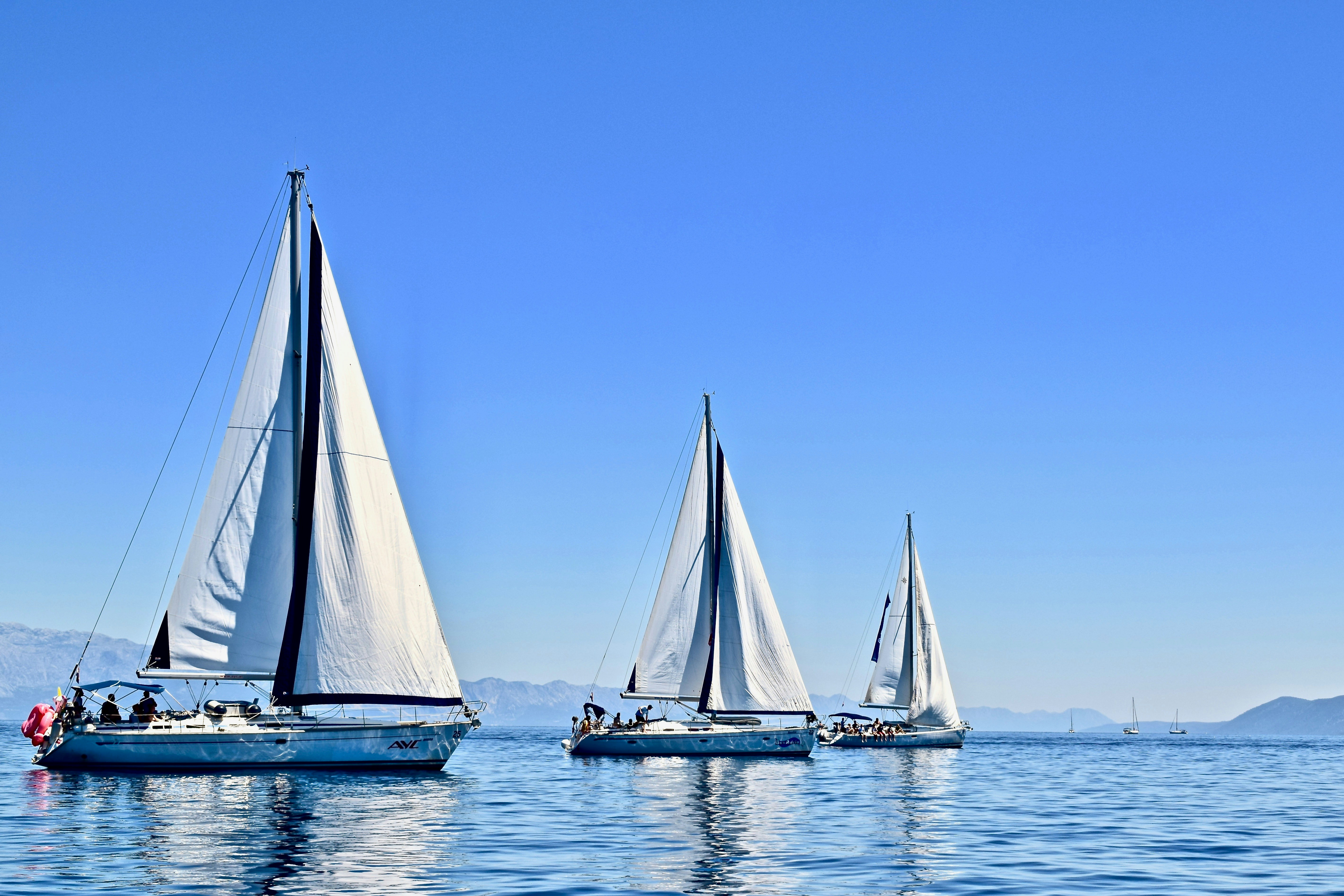
The international sale of boats and catamarans is an exciting operation, but legally sentient, with financial stakes that are often very high. Good control of the contract, the change of ownership, the francization, the choice of flag and the fiscal impacts is essential to avoid unpleasant surprises in France and abroad.
Find my dedicated article on yacht sales here.
International sale of boats and catamarans: what are we talking about in concrete terms?
The international sale of boats and catamarans covers all transactions where the seller, the buyer, the place of registration or the flag are located in different states. This international dimension involves both contract law, maritime law, tax law, transport law and sometimes customs law.
In practice, this concerns as well:
- The French entrepreneur who buys a cruising catamaran from an Italian shipyard to operate it for seasonal rental in the Antilles.
- The boating enthusiast who resells his pleasure boat registered under the Maltese flag to a purchaser residing in France.
- The charter company that builds a catamaran in Asia, finances it through a leasing company and registers it under a flag called “of convenience” (Malta, Marshall Islands, Cayman Islands, etc.).
The major legal challenges of an international boat or catamaran sale
Financial risks and liability of the seller/buyer
The main risks relate to:
- La proprietorship of the boat (titles, maritime mortgages, enforceability against third parties).
- Les hidden defects (engine, hull, electronics, damage history).
- Les lack of conformity (non-compliance with the contractual description, missing equipment).
- Les delivery delays and the unavailability of the ship.
Concrete example: a seller transfers a boat by private agreement, but the purchaser does not register or change ownership. The Council of State recalled that if the formalities are not completed at the registry office, the sale is not enforceable against third parties, so that the administrations can continue to take action against the former owner (taxes, fees, fees).
Risks related to registration, flag and formalities
The choice of flag (France, Malta, Marshall Islands, Cayman, etc.) has a direct impact on:
- The tax regime (VAT, annual francization and navigation fees, passport fees).
- Social obligations towards the crew.
- Security, arming and control regulations.
In France, certain boats must be registered, and the sale has no effect on third parties until such registration. Poor management of formalities can therefore make the sale unenforceable and leave the seller exposed to claims or taxes.
Tax risks (VAT, francization law, passport law)
An international boat or catamaran sale can trigger:
- La VAT (for example, when first put into service in the European Union, or when importing a vessel under a third flag).
- The annual francization and navigation law (DAFN) for French boats.
- The Passport law for a boat under a foreign flag kept by a French resident.
Tax abuse can lead to adjustments, fines or, in terms of the temporary admission regime, claims relating to the full value of the yacht or catamaran.
How to legally structure an international boat or catamaran sales contract?
Standard contract (MOA, Memorandum of Agreement) and necessary adjustments
In yachting, it is common to use models of Memorandum of Agreement (MOA), often inspired by Anglo-Saxon contracts, which should be adapted to the concrete needs of the parties (private use, charter, commercial exploitation, financing).
For a French entrepreneur, it is generally essential:
- To adapt the applicable law and jurisdiction clauses (for example to favour French law and a French maritime jurisdiction or arbitration body, rather than English law and a London jurisdiction).
- To specify the suspensive conditions (financing, obtaining a lease, prior sale of another ship, obtaining a berth).
- To precisely calibrate the delivery clause (port, date, condition of the boat, crew pick-up or not).
Essential clauses of an international boat sales contract
Here are the clauses that deserve particular attention:
- Purpose and ship description clause : description of the boat (make, model, hull/HIN number, year, flag, registration, length, engine power, main equipment). A detailed inventory is highly recommended.
- Prices and terms of payment : deposit, possible receivership, payment of the balance upon signature of the Bill of Sale or at the delivery protocol, conditions for the return of the deposit in the event of non-compliance with the suspensive conditions.
- Delivery clause and transfer of risks : date and place of delivery, condition of the ship (inspection, sea trials), time of transfer of risks and ownership.
- Guarantee and hidden defects clause : guarantees from the seller on the property, the absence of mortgages and privileges, the absence of port debts or unpaid taxes, and possible adjustment of the regime against hidden defects.
- Applicable law and dispute resolution clause : choice of law (French or other) and competent jurisdiction (commercial courts, maritime arbitration, etc.).
Example of a (simplified) transfer of ownership and risks clause
As an illustration, a simplified clause could be written as follows (to be adapted imperatively on a case-by-case basis):
“The ownership of the vessel, as well as the risks of loss or deterioration, are transferred to the Purchaser on the date the Bill of Sale is signed and provided that the sale price has been paid in full. Until this date, the ship remains under the care and risk of the Seller, who alone will bear any loss or damage, except at the sole fault of the Purchaser.”
Such a clause must be articulated with the terms of delivery, insurance and suspensive financing conditions, as well as with the specific rules of registration and enforceability against third parties.
Change of owner of a boat or a catamaran: practical and legal formalities
How do you sell a boat between individuals?
Selling a boat between individuals seems like selling a vehicle, but with maritime specificities that should not be overlooked.
The classic steps are:
- Negotiation of the price, equipment included, delivery date, possible preliminary work.
- Writing a Deed of sale or transfer contract, including the complete identity of the parties, the detailed description of the boat, the price, the terms of payment, the terms of delivery and the mention of the absence of mortgages or known debts.
- Signature of the bill of sale, payment of the price (often via secure bank transfer).
- Fast completion of registration formalities and change of ownership with the competent authorities (customs, maritime affairs, registry, depending on the type of vessel).
How do I transfer a boat? How do I change the owner of a boat?
From a legal point of view, the transfer involves:
- One Deed of sale or written transfer certificate, signed by the seller and the buyer.
- The filing of a file with the competent administration with: bill of sale, identity documents, proof of previous ownership, possibly a francization act, registration certificate, etc.
- The declaration of the change of ownership within the legal deadlines, under penalty of remaining liable for certain taxes or of seeing the sale unenforceable.
For some ships, the Transport Code provides that the sale has no effect on third parties until the boat is registered in the name of the purchaser. This means that a seller who simply signs a document without ensuring that the registration is up to date could remain “officially” the owner in relation to the authorities.
What is the rate/price for changing the owner of a boat?
The cost of changing ownership generally includes:
- Les administrative costs linked to the file (possible registration fees, administrative fees).
- Possibly some francization or navigation rights, if the change is accompanied by a change in the administrative situation (for example francization of a foreign boat or change of flag with reassessment of rights).
These costs vary according to:
- The length of the boat.
- The power of the engine.
- The value and type of the vessel (pleasure, trade).
- The possible change of flag or mode of operation (private/commercial).
In practice, it is recommended to specify in the contract who will bear these costs (seller, buyer, sharing) to avoid future disputes.
Flag and francization: how to change the flag of your ship or francize a boat purchased abroad?
How do I change the flag of my ship?
Changing the flag of a boat consists in modifying the State of registration and therefore the legal regime applicable to the ship. In principle, this means:
- The removal of the boat from the register of the original flag.
- Registration with the new flag (France or other State), with the submission of a complete file (title deeds, proof of cancellation, characteristics of the ship, insurance).
This change of flag:
- May have consequences Fiscal (VAT, duties and taxes specific to the new flag).
- May modify the social regime applicable to the crew and regulatory obligations.
- Often requires the assistance of professionals (lawyer, shipping agent, customs freight forwarder) to coordinate formalities in several countries.
What is the act of francization of a boat?
THEAct of francization is, to simplify, the maritime equivalent of the vehicle registration document for a land vehicle. It is a navigation document issued by the customs administration, which:
- Allow the boat to fly the French flag.
- Attests to its registration with the French authorities.
- Conditions the submission of the boat to French law (legislative and fiscal), in particular to the payment of the Annual Francization and Navigation Tax (DAFN) when this is due.
The act of francization is attached to the boat and its owner and remains valid throughout the life of the ship as long as it flies the French flag. Any change (transfer of ownership, modification of the engine, change in hull length, etc.) must be declared to the administration, which issues a new document.
How can I francize a boat purchased abroad?
For Francize a boat purchased abroad, it is generally suitable for:
- To prove ownership (invoice, bill of sale, bill of sale).
- To provide the technical characteristics of the boat (certificates, conformity).
- To complete import customs formalities if the boat comes from a country outside the EU, which can trigger VAT taxation.
- To file a file with the customs service to obtain the act of francization.
When the boat was previously under a foreign flag, francization is often essential to navigate regularly under the French flag. However, there are cases where a European or French national, residing in France, can keep the foreign flag provided they pay a Passport law, in an amount equivalent to DAFN.
Where can I find my francization act?
Your francization act is issued by the customs services competent for your zone. It is presented as an official administrative document containing:
- The identification of the boat.
- The identity of the owner.
- The registration number.
In practice, if you have lost it, you can:
- Contact the customs office that issued the document to request a duplicate.
- Consider, according to regulatory changes, dematerialized access via online portals dedicated to boating (when they exist).
What is the price of a francization act for a boat?
The act of francization in itself is part of a set of duties and taxes, the main one of which is the DAFN. The amount of this fee depends in particular on:
- The length of the ship.
- From the power of the engine.
- Of the use of the boat (personal pleasure, commercial exploitation).
- Possible allowances or exemptions depending on the situation.
Some specific regimes, such as registration in the RIF register (French International Register), may entitle you to fiscal or social benefits (for example a reduction in employer contributions for crew members residing in France), which must be studied on a case-by-case basis.
Practical example: international sale of a catamaran operated for charter
To illustrate, let's take the case of a French entrepreneur who operates a 50-foot catamaran on charter in the Caribbean.
The main legal questions will be:
- What pavilion choose (France, Malta, Marshall Islands, etc.) to optimize taxation, social rules and operational flexibility?
- What contractual arrangement retain (direct ownership, leasing company, management company)?
- How to structure the international sales contract with the foreign shipyard (or the previous owner) to secure delivery, guarantees and transfer of ownership?
- What customs formalities and what VAT should be incurred when the ship is imported into the EU?
In such a case, the intervention of a lawyer who is used to coordinating:
- Drafting and negotiating the MOA.
- Exchanges with flag authorities.
- The procedures for registration and francization or registration in a foreign register.
- The establishment of possible maritime mortgages or financing guarantees.
is often decisive in avoiding risky choices that are difficult to reverse.
Practical framework: points of vigilance for the entrepreneur or boat enthusiast
Before signing a compromise or MOA
Before signing, be sure to:
- Check the chain of ownership of the boat (successive titles, absence of mortgages or maritime privileges).
- Check the tax situation (VAT paid, possible customs debts, up-to-date francization rights).
- Have a expertise and sea trials, documented in writing.
- Clearly define the applicable law and the competent jurisdiction, by evaluating what litigation in London, Malta or another foreign jurisdiction actually means.
After signing: mandatory formalities
After signing the bill of sale:
- Proceed without delay to change of ownership with the authorities (customs, maritime affairs, competent register).
- Update theAct of francization or foreign registration documents.
- Adjust your insurance (new owner, new flag, new navigation area).
- Check the impacts Taxation (VAT, DAFN, passport fees).
The role of the lawyer in the international sale of boats and catamarans
Boat sales lawyer: why get help?
A lawyer involved in the sale of boats and catamarans intervenes at several levels:
- Project analysis (purchase for private use, commercial operation, charter, management company).
- Negotiation and drafting of the international sales contract (MOA, suspensive conditions, warranty clauses, applicable law and jurisdiction clauses).
- Coordination of registration formalities, change of flag, francization and tax compliance.
- Management of disputes possible (cancellation of sale, hidden defects, lack of delivery, litigation with customs or flag authorities)
The challenge is to transform a passion or an investment into a legally controlled operation, rather than discovering unanticipated risks afterwards.
Can a lawyer do a bill of sale?
Yes, a lawyer can perfectly draw up and formalize a bill of sale of boat or catamaran. As part of its advisory mission, it:
- Write a tailor-made contract, adapted to the situation of the parties and the applicable rules.
- Ensures that the act contains all the mandatory information and the necessary protection clauses.
- Coordinate, where appropriate, the intervention of a notary when the authentic form is required or desirable (for example in the presence of complex collateral, international arrangements or bank financing).
The intervention of the lawyer also makes it possible to document the exchanges, to trace the stages of the negotiation and to secure the evidence in the event of a subsequent dispute.
FAQ: international sale of boats and catamarans, flag, francization and change of ownership
How do you sell a boat between individuals?
The sale of a boat between individuals takes place in several stages: negotiation, drafting of a detailed bill of sale, signature, payment and then administrative formalities for changing the owner and, if necessary, updating the francization act or registration. It is only once these formalities have been completed that the sale is fully secure and enforceable against third parties.
How do I transfer a boat?
To transfer a boat, you must:
- Write a Deed of sale or transfer certificate containing the full identity of the parties, the description of the vessel, the price, date and method of payment, as well as declarations of ownership and absence of encumbrances.
- Sign the act, keeping several originals.
- File a change of ownership file with the authorities (customs, maritime affairs, register).
The support of a lawyer makes it possible to ensure that the act meets the requirements of the applicable regulations and to avoid inaccuracies that can generate disputes.
How do I change the owner of a boat?
The change of ownership takes place:
- By the Signature of the bill of sale.
- Then by the Declaration of transfer of ownership with the competent services (customs, registry, maritime affairs), resulting in the issuance of a new registration document or a new francization act.
As long as the registration is not updated, the former owner may remain considered as such by the authorities, which may have fiscal or administrative consequences at his expense.
What is the price for changing the owner of a boat?
The rate for the change of ownership depends on:
- Administrative fees charged for processing the file.
- Duties and taxes that may be due (VAT, annual francization and navigation fees, passport fees, depending on the situation).
It is therefore prudent to anticipate these costs as early as the negotiation and to indicate in the contract who will bear the burden.
How do I change the flag of my ship?
To change the flag:
- The ship must be removed from the register of its current flag.
- A registration file must be submitted to the authorities of the new flag, with the ownership documents, the technical characteristics of the boat and, where applicable, evidence of technical compliance.
This change can have significant effects on taxation, crew welfare and safety controls, which is why specialized legal support is needed.
How can I francize a boat purchased abroad?
To francize a boat purchased abroad, it is necessary to:
- To regularize its customs situation (import, VAT).
- To file with customs to obtain the francization act, with the title deeds and the characteristics of the boat.
- To check if the boat meets the criteria to fly the French flag (owner, use, characteristics).
This approach conditions the possibility of sailing in France under the French flag and of complying with French legal obligations.
What is the act of francization of a boat?
The francization act is a mandatory administrative document for many pleasure boats sailing under the French flag, which attests to their registration with customs. It makes it possible to officially identify the ship and to link its ownership, while determining the duties and taxes (in particular the DAFN) for which the owner is liable.
Where can I find my francization act?
Your francization act is handed over by the customs services when the boat is registered. In the event of loss, it is possible to contact the office that issued it to request a duplicate and, depending on the arrangements in place, to access certain information via online services dedicated to the registration of pleasure boats.
What is the price of a francization act for a boat?
The cost associated with the act of francization is mainly materialized by the annual francization and navigation rights, the amount of which depends on the length of the boat, the power of the engine, the use of the vessel and various fiscal parameters. This amount can be significantly different depending on whether the boat is used for personal pleasure or for commercial exploitation.
Boat sales lawyer: how can he help me with an international sale of boats and catamarans?
A specialized lawyer can:
- Evaluate the risks of the transaction, especially international risks (flag, applicable law, taxation).
- Draft or adapt the sales contract (MOA) and the deeds of transfer.
- Organize the change of owner, the francization and the procedures for changing the flag.
- Assist in the event of a dispute, late delivery, hidden defects or difficulties with customs.
Its intervention allows you to transform a complex operation into a secure and controlled process.
Can a lawyer do a boat sale?
Yes, a lawyer can draft a boat or catamaran bill of sale and legally oversee the transaction. It can:
- Draft the act in accordance with the applicable regulations, by integrating the clauses adapted to the international dimension of the operation.
- Ensure consistency between the bill of sale, registration procedures and taxation.
- Work with a notary and other professionals (shipping agents, freight forwarders, experts) when the arrangement or the amount of the transaction requires it.
A regulated matter requiring the intervention of a lawyer
The international sale of boats and catamarans, francization, the change of flag and the change of owner are highly important matters. regulated where maritime law, contract law, tax law, transport law and customs rules intersect. Each operation has specific characteristics related to the type of ship, the flag, the financial arrangements, the use (private or commercial) and the States involved.
In this context, the support of a lawyer in commercial contracts and maritime law is strongly recommended in order to anticipate risks, draft solid contracts and manage formalities (registration, francization act, change of owner, choice of flag) in a timely manner. Customized advice remains the best guarantee to protect your interests, secure your investment and enjoy your boat or catamaran with peace of mind.
Article written by Guillaume Leclerc, lawyer in commercial contracts and commercial litigation in Paris, 34 Avenue des Champs-Elysées.