
Fleet manager in conciliation or insolvency proceedings in France: protecting your boat and your claim
French charter fleet manager in conciliation or insolvency: deadlines to file your claim, reclaim your boat and deal with the management contract.
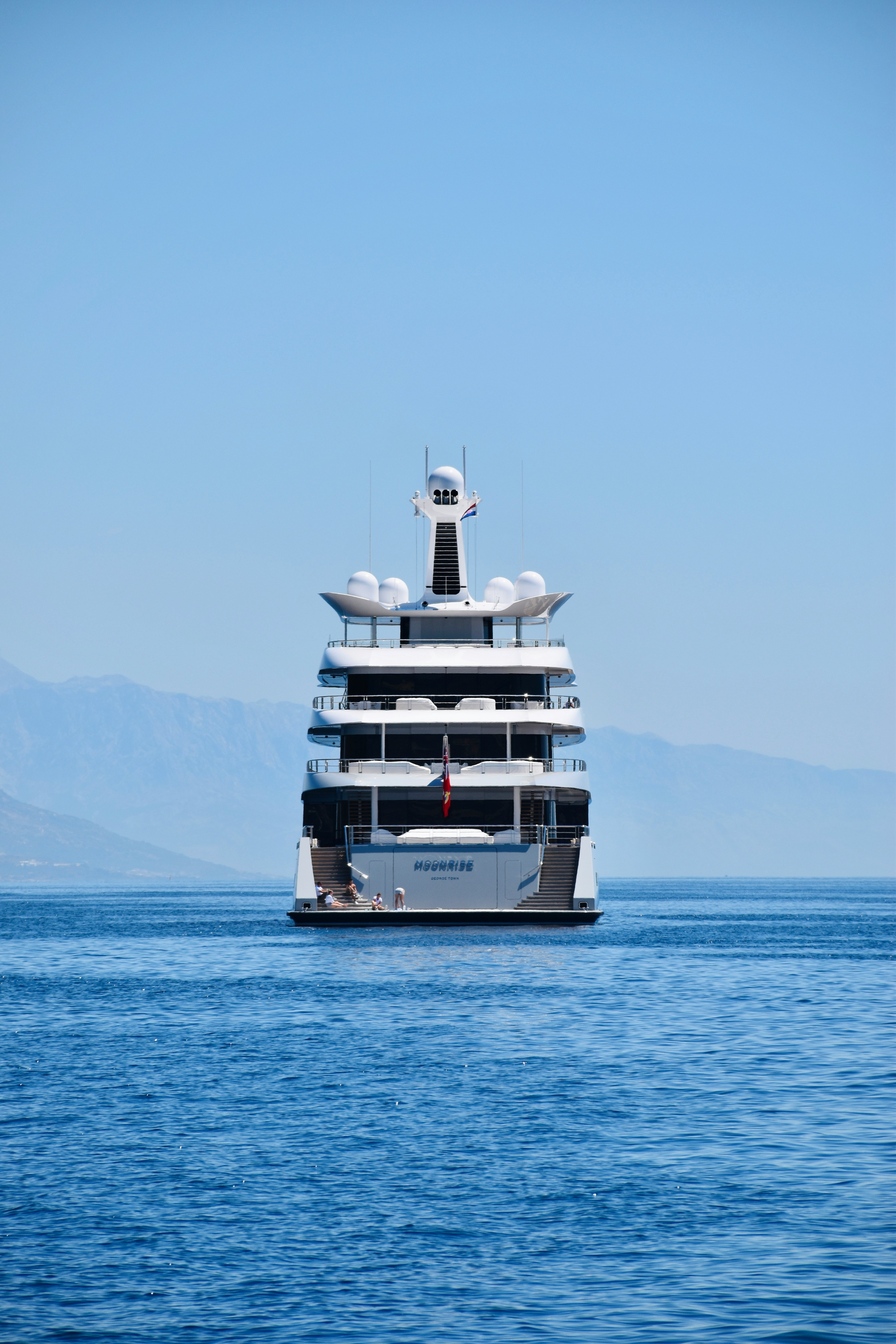
Owners who place a sailing yacht or a catamaran with a charter fleet manager in France sign a management and charter contract (contrat de gestion-location) covering chartering, maintenance, insurance, the operating base and, often, an income paid to the owner. When the manager's group runs into difficulty, owners face French insolvency law (droit des entreprises en difficulté), with short time limits that sometimes run from a publication nobody points out to them.
A conciliation is a confidential negotiation that does not, on its own, change the position of an owner who took no part in it. Collective insolvency proceedings (safeguard, judicial reorganisation or judicial liquidation) start time limits that bind every creditor, owners included. This article starts from a fictitious case and then covers the fate of the contract, the proof of claim, the ownership claim and the plan. Owners can rely on our yacht and pleasure boat practice in France.
The case: a fleet manager whose group is in difficulty (fictitious case)
The case is as follows (fictitious case): a fleet manager whose group is in difficulty; subsidiaries have obtained court approval of a conciliation; the owners wonder what will happen to their boats and their income if insolvency proceedings are opened.
The owner then has to deal with ownership of a boat that is in the manager's hands, the fate of income and arrears, and timing. During a conciliation, the owner has, in principle, no statutory deadline to meet; once insolvency proceedings are opened, several deadlines start on the same day. This is the time to reread the contract and gather documents, without signing anything under pressure.
Conciliation or insolvency proceedings: what changes for the owner
Conciliation: confidential and time-limited
Conciliation is an out-of-court procedure opened at the company's request. The court president appoints a conciliator for up to four months, extendable to five months in total (Article L. 611-6 of the French Commercial Code (Code de commerce)). Anyone involved is bound by confidentiality (Article L. 611-15). The owner's contract is not changed: a clause that worsens the debtor's position solely because a conciliation has been opened is deemed unwritten (Article L. 611-16). The manager may, however, ask the judge for payment delays against a creditor who has served formal notice, sued, or refused the conciliator's request to suspend the debt (Article L. 611-7).
Court approval: a judgment third parties can consult
A conciliation ends with an agreement either recorded by the court president, without publication, or approved by the court (homologation) (Article L. 611-8). Approval requires, among other things, that the agreement does not harm non-signatory creditors. The approval judgment is filed with the court registry, where any interested party may consult it, is published, and may be challenged by third parties (Article L. 611-10). While it is performed, the agreement suspends actions to recover the claims it covers (Article L. 611-10-1). An owner who did not sign keeps the rights given by the contract, although the judge may grant the manager grace periods in some cases.
Insolvency proceedings: a published judgment that starts the clock
If the conciliation is not enough, collective proceedings may be opened. The judgment is published in the BODACC (the official bulletin of civil and commercial notices) within fifteen days (Article R. 621-8), and that publication starts the time limits for filing claims and reclaiming assets. The judgment also prohibits payment of debts that arose before it (Article L. 622-7) and stops actions for payment, actions to terminate a contract for non-payment and enforcement measures (Article L. 622-21).
Table 1 - Conciliation, court approval, insolvency proceedings: what changes for the owner
Does the management and charter contract continue?
Under Article L. 622-13, notwithstanding any statutory provision or contractual clause, no termination of a current contract can result solely from the opening of proceedings. The other party must keep performing even though the debtor failed to meet earlier obligations, which only give a right to file a claim. An owner left unpaid before the judgment therefore cannot, on that ground alone, take the boat out of the fleet. The same rules apply in judicial reorganisation; in liquidation, the liquidator decides under similar rules.
Only the court-appointed administrator may require performance of the contract, after checking that funds will be available (Article L. 622-13, II). The owner may send a notice to elect: if unanswered for more than one month, the contract is terminated by operation of law, and the insolvency judge (juge-commissaire) may shorten that period or extend it by up to two months (Article L. 622-13, III). Where no administrator has been appointed, the notice goes to the debtor by registered letter, with a copy to the creditors' representative (Article R. 627-1). Whether to force a decision or let the contract run depends on the boat, the expected income and the season, which is where early advice from a lawyer pays off.
The insolvency judge may also order termination at the administrator's request (Article L. 622-13, IV). Damages resulting from non-continuation are filed as a claim (V) within one month of the termination or of notice of the order (Article R. 622-21). If the contract continues, sums arising after the judgment in return for a service provided to the debtor are payable when due and, if unpaid, enjoy priority, provided they are reported within one year after the end of the observation period (Article L. 622-17).
Filing a proof of claim: two months from the BODACC publication
Creditors whose claims arose before the opening judgment send a proof of claim to the creditors' representative (mandataire judiciaire) (Article L. 622-24). For an owner, this usually covers income due and unpaid at the date of the judgment and expenses advanced. The claim states the sums due and to fall due and is certified as genuine by the creditor (Article L. 622-25).
The time limit is two months from publication of the opening judgment in the BODACC, extended by two months, where the proceedings are opened in metropolitan France, for creditors who do not reside there (Article R. 622-24). The creditors' representative must notify known creditors within fifteen days (Article R. 622-21), but management and charter contracts are generally not published, so owners should not wait for a letter. If the manager has reported the claim, it is presumed to have acted for the owner until the owner files (Article L. 622-24); that presumption guarantees neither the amount nor completeness. A creditor who misses the deadline is excluded from distributions unless granted relief, which must be sought within six months of publication, or one year for a creditor who could not know of the claim (Article L. 622-26).
Table 2 - The owner's timetable after the opening judgment
Reclaiming the boat: three months, or the right is time-barred
The boat does not belong to the manager, but it is in its hands. The owner of movable property held by the debtor must bring an ownership claim (revendication) within three months of publication of the opening judgment (Article L. 624-9). The Cour de cassation has restated that the claim is time-barred after this period and that it serves to make ownership enforceable against the proceedings (Cass. com., 27 March 2024, No. 22-14.028). An owner who misses it may no longer be able to rely on ownership against the proceedings, and there is no point waiting for the boat to appear in the debtor's inventory (Article L. 622-6).
The claim is sent by registered letter with acknowledgment of receipt to the administrator or, if none was appointed, to the debtor, with a copy to the creditors' representative. If it is not accepted within one month of receipt, the owner must apply to the insolvency judge within the following month. The claim automatically includes a request for return (Article R. 624-13), and the letter should identify the boat and its equipment precisely.
An owner whose contract was published before the opening judgment is exempt and simply requests the return of the asset (Articles L. 624-10, R. 624-14 and R. 624-15). To our knowledge, management and charter contracts are rarely published, so a claim within three months remains the safe course. Recognition of ownership does not mean immediate return: where the boat is under a contract in progress at the opening, actual return takes place when the contract is terminated or expires (Article L. 624-10-1). If the boat is financed by leasing (crédit-bail), the legal owner is the lessor, and the steps must be coordinated with it.
A French-registered boat: exempt from the ownership claim?
In its judgment of 27 March 2024 (No. 22-14.028, published in the Bulletin), the Cour de cassation held that the owner of an aircraft entered in the French civil aviation register is not subject to the Article L. 624-9 procedure. It relied on the Transport Code, under which registration of an aircraft serves as title: since registration makes ownership enforceable against everyone, it is necessarily enforceable against the proceedings. The owner, who had left the aircraft with the debtor for maintenance without filing a claim in time, obtained its return.
The French registration (francisation) of a pleasure boat also records the owner's name. However, the aircraft ruling rests on a provision specific to civil aviation, and the Cour de cassation has not, to our knowledge, ruled on a pleasure boat: the question remains open. The prudent course is to file the ownership claim within three months; the 2024 ruling could be argued if the deadline had been missed, with no certainty as to the outcome.
The plan: answering the consultation and voting in classes
In most proceedings, the creditors' representative asks each creditor whether it accepts the proposed payment terms and write-offs. In a written consultation, failure to answer within thirty days counts as acceptance (Article L. 626-5). For creditors who refuse, the court may impose uniform payment terms (Article L. 626-18) within the plan's maximum duration of ten years (Article L. 626-12). Owners living abroad should arrange for their mail to be followed.
In larger companies, affected creditors are grouped into classes of affected parties, mandatory above 250 employees and EUR 20 million of net turnover, or EUR 40 million of net turnover (Articles L. 626-29 and R. 626-52). The administrator forms the classes on objective, verifiable criteria (Article L. 626-30), and each class votes within twenty to thirty days by a two-thirds majority of the votes cast (Article L. 626-30-2). Under strict conditions, a plan may be imposed on a dissenting class.
Step by step
Deadlines run from the BODACC publication, not from the date of the judgment or the date the owner learned of it.
- Step 1 - As soon as the difficulty is known: reread the contract, gather documents and answer in writing, reserving your rights.
- Step 2 - Watch publications: check the BODACC regularly for each group company you contracted with.
- Step 3 - On publication of the opening judgment: note the date, identify the administrator and the creditors' representative, and calculate the deadlines.
- Step 4 - Within two months (four outside metropolitan France): send the proof of claim with supporting documents.
- Step 5 - Within three months: send the ownership claim by registered letter, with a copy to the creditors' representative.
- Step 6 - One month after receipt of the claim: if it is not accepted, apply to the insolvency judge within the following month.
- Step 7 - Decide on the contract: serve a notice to elect if appropriate, and file any damages claim within one month of termination.
- Step 8 - During preparation of the plan: answer the consultation within thirty days, or follow your class vote.
- Step 9 - Recover the boat: organise the return (condition report, inventory, ship's papers, insurance, delivery trip) when the contract ends.
Each step involves choices that depend on the contract and on the proceedings. A lawyer's involvement helps avoid a missed deadline or a poorly worded letter being used against the owner later.
Documents to gather
The owner must be able to prove ownership, what the manager owes and the condition of the boat at handover, ideally before any proceedings are opened.
Table 3 - Owner's document checklist
Frequently asked questions
Is my boat part of the manager's assets in insolvency proceedings?
In principle, no: the boat remains the owner's property. But because it is in the debtor's hands, the owner must assert ownership through a claim within three months of the BODACC publication, unless the contract was published, or ownership may no longer be enforceable against the proceedings.
Do I need to file an ownership claim even though I own the boat?
Yes, as a precaution. Article L. 624-9 of the Commercial Code requires it for movable property held by the debtor. The exemption accepted for published contracts, and in 2024 for a registered aircraft, has not, to our knowledge, been extended to a French-registered boat.
What is the deadline for filing my claim?
Two months from publication of the opening judgment in the BODACC, or four months for a creditor who does not reside in metropolitan France when the proceedings are opened there. Damages for termination are filed within one month of termination.
Does the contract continue after the opening of proceedings?
In principle, yes. The judgment does not end the contract, and a clause providing for termination on that ground alone has no effect. The administrator decides; the owner may serve a notice to elect, and the contract is terminated if there is no answer within one month.
Conclusion
During a conciliation, the owner has time to prepare: the contract is unchanged and the agreement binds only those who sign it. Once insolvency proceedings are opened, the pace changes: two months to file a claim, three months to reclaim the boat, one month to file damages after termination, thirty days to answer the plan consultation. Since the exemption for French-registered boats remains an open question, it is wise not to take chances with the deadlines. Victoris assists owners at each step, from contract review to the plan. See also our page on companies in financial difficulty.
Guillaume Leclerc, avocat at the Paris Bar, Victoris law firm, 34 avenue des Champs-Élysées, Paris.
Further reading:
